I have been wanting to write about Varda by Agnès since I saw it last Sunday, but kept postponing-being interrupted. The memory grows paler but the haunting is constant.
First off, a confession: I have never seen any Varda films. My knowledge of cinematic arts is very disorganized; all this time I knew I should watch her major works. But with films, I always do this weird delaying of the pleasure, wait until I have the right state of mind. With many serious directors, this habit proved to be useful–I wouldn’t appreciate Lynch a decade ago, for example. There are certain times and thresholds for artworks in general, they are not something readily available any time for our understanding. At least this is an idea of art I want to uphold.
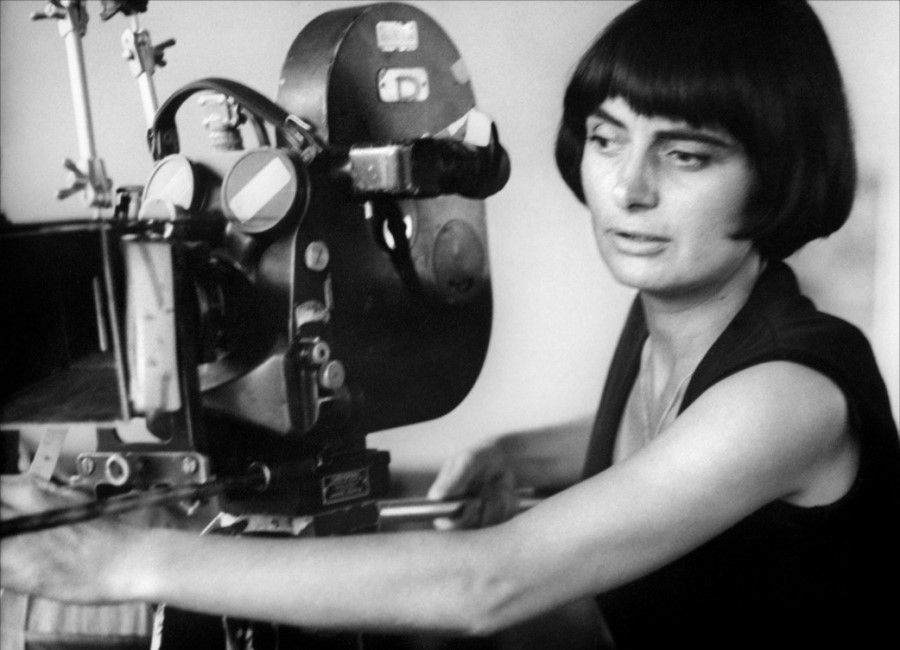
Luca, my neighbor-friend I invited at the last minute, jokes that we both will start watching her in reverse direction. This last film, quasi-chronologically revisits her artistic output, but not necessarily in order or in a catalogue fashion. The masterful narrator she is, Agnès walks us through certain politic-aesthetic trajectories of her filmmaking. Inspiration-creation-sharing, she says, are the three most central principles through and for which she makes films:
Inspiration, why you make a film; the motivations, ideas, circumstances, and happenstance that spark a desire and set you to make a film. Creation, how you make a film. By which means, which structure, alone or not alone, in color or not? Creation is labor. Sharing: You don’t make films to watch them alone, you make films to show them. Deep down, you have to know why you do this job.”
That is to say, sharing marks the intention and destination of the film, its power to communicate and create a community. As I listen to her, I have a moment of illumination. It becomes clear that for various reasons our generation of artists (cinematic, theatrical, otherwise…) is falling short in all of them. Instead of inspiration, we often find abstract problems, autobiographic obsessions, political needs for affirmation or redeeming guilts at best. As to creation, we have terrible habits of turning to familiarity and cutting corners because time, places, money, other artists’ goodwill are too limited to give yourself in to the luxury of trying things. But perhaps more truthfully, the failure comes from the combination of the overwhelming amount of choices, the infuriating ignorance of critical thinking and aesthetic tools, the avoidance of dialogic process of asking questions and reflecting on the process. Sharing: The meaning of that very word has changed so much with the online culture that I am now not sure it connotes the same as Agnès meant it. Sharing requires a context of generous as well as critical care and attention. Places and times to do so are too accelerated and shrunk, literally virtualized, to allow for that. I do know of people trying to resist this and carve out their niches, and they succeed in varying degrees, at least to let them keep going for a while. But I am not sure how much of sharing and how much of surviving there is to it.
A moment in which I found myself leaning towards the screen at the edge of my seat with excitement was when she was discussing her film Vagabond. She breaks down the long sequences of continuous movement, why she chose a certain direction of camera and plan, what we see and what kind of a puzzle that is. She doesn’t explain any deeper “meaning,” she just frames and points out what we are seeing, and gives form and energy to our way of looking at it. For the sake of not spoiling it for you, I will leave it at that it was the best lecture for what dramaturgy means. Granted, she is doing it in reverse. But like her explanation of “creation,” Agnès’ artfulness is in testing and tying the choices out of infinity, which speaks sometimes fluently and sometimes cryptically.
Also during the section on Vagabond, she talks to Sandrine Bonnaire about how she acted that part. Without psychologizing the character, but coming close to the embodied approaches of method acting, Agnès asks her to go through and find her way out in the precarity of being angry and on the road without direction. We see a woman passing time and passing swathes of far from idyllic earth, Agnès tells us. Everything is extremely objective, her body moving in the places, encountering things and persons that draws her or that she pushes away. There are the material conditions of life in abandon and the necessity to figure out how to continue, and these bind the actor as concretely as the character she is presenting. Either a fiction film or a documentary, what she shoots is wondrous, sensuous (especially the music and the colors!), and demystifying all at the same time.
Another thing that made me catatonically shake in my seat is the crystallizations of her joy, how she continues playfully and with good humor. When she creates a feminist song with Marx’s lyrics, when she is choosing the heart-shaped potato for herself during her Gleaners, while she is burying her beloved cat, while she is losing her eye sight… I took it as her parting gift and lesson to younger generations (of artists, feminists, rebels, lovers, gleaners…) for how to live on ethically, that is, how to live a good life despite knowing full well that the world is unjust, violent, irrational, greedy, and rushing suicidally to its annihilation.
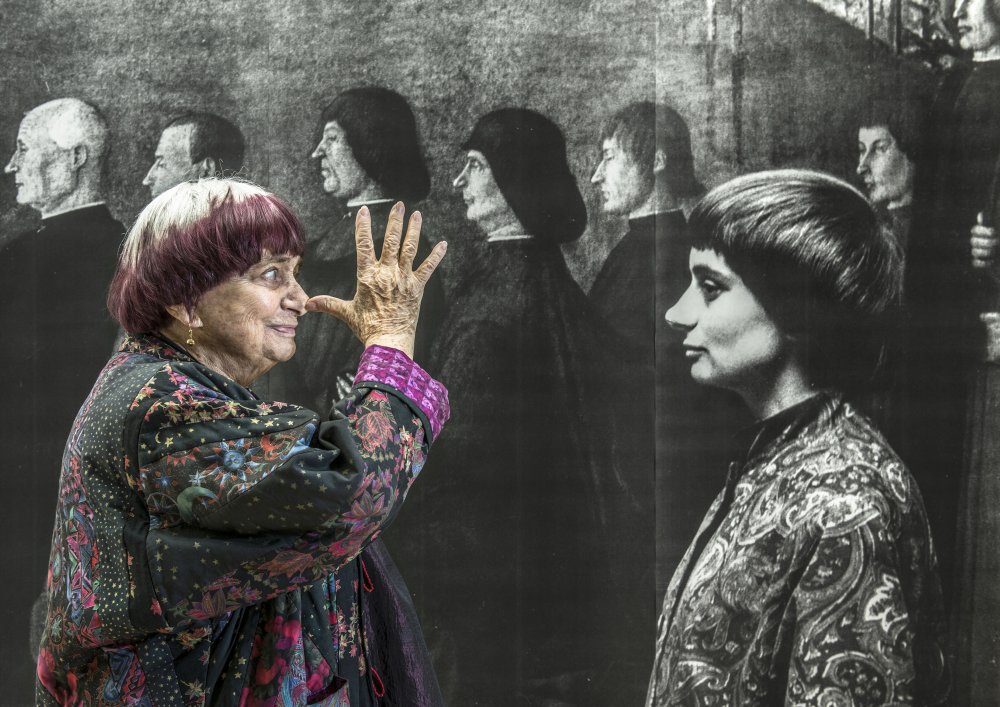
Luckily the release of the film also occasions a series of retrospective screenings, so I will now make up and go deeper with all the little signs she left for us to mull over in her films, some of which, she giggles, “are only for her to know.”
 Eylül Fidan Akıncı