I was being anal-retentive* again, hoarding on moments and words to match them, but not courageous enough to externalize them from my body. But the day is extremely strong in urging me to just get it out there, because the pile is gelling with the studious and amnesiac work of the bacteria that we commonly call time. [*Wiki says Freud said that libido energy is under-indulged during this period of time–so relevant for reasons that will become clear in the next posts]
It started two weeks ago, during my second Alexander Technique class. Fabio, our Brazilian-former-Streb-dancer instructor whom all my gay friends happen to know somehow, was talking about how humans evolved to stand up and walk bipedal. He had a model skull in his hand, showing the gaping hole called foramen magnum, which traveled from the back of skull to the middle of its bottom, so that our spine–the Atlas*, our first vertebra, to be precise–could lift and balance the heavy head when we raise on our two feet. The chicken and egg relationship is unclear for me; as in any anthropogenesis myth, what causes anything and what results from it can be shifted to tell the inglorious story of our emergence differently. I had heard him say the same words the week before, but only in its iteration that his spiel reminded me of the question of animality as it was posed by Derrida and Agamben. [*The first time I heard of this vertebra was back in 2009 when I had my first movement class ever, I was in a makeshift dance studio at the top floor of an old Taksim building that was on a tiny street that bore the name of a famous Yeşilçam actor and was full of neon lights. I was very insecure and, to make matters worse, was constantly called out for how I was hunching over unnecessarily]
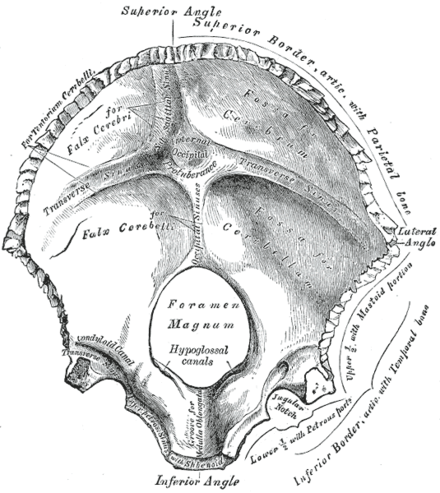
The animals and babies, Fabio continued, don’t calculate their movements. They don’t suffer back pain, they don’t do extra corrective or compensating motions, they don’t need to warm up. As we grow, our behaviors, beliefs, habits, traumas, emotions and thoughts creep in the way we carry our heads over our bodies. The problems in the body begin right there, in the severing of that connection between foramen magnum and Atlas, because the brain deludes itself with autonomy, I murmured in my skull. He said, “the animal and the baby is fully present in the moment.” If so, then anthropogenesis must be the destruction of the presence and totality where the brain was only an organ like any other, the severing of thinking-being from out of the body. What we call “I” is the bridge that marks the separation, perhaps “I” is the only logograph in English language that stands for the long thin fragile neck of the species named after self-knowledge. That separation of the head and the body is what allows us to stand on our feet and objectify the world within our hands and thoughts. The vision that takes the world in wide-angled plans loses sight of its own materiality, which is constantly at the brink of losing its endless negotiation with gravity. Anthropogenesis is the war you wage on your muscles for (what you think must be) transcendence. Honey, you need a sexy Alexander instructor to stop the pains of getting over yourself.
Flash back to the summer of 2017, I am staying at M’s house looking after her two cats, or rather reading The Animal That Therefore I Am and The Open under their watchful gaze. My notes from that time do not clarify if I was doing direct quotations or summaries or comments, and I am too lazy to figure it out, so take these as a choral rumination between me in 2017, me in 2020, a dead man, a living man, two cats, and a ghost:
The theological appearance of human: as autobiographical animal, “I”, speaking under his own (propre) name, giving names to other living creatures that were created before him, a chasing after which is also the genesis of time. Anthropo-theomorphic reappropriation. This is what Derrida questions, the history as the autobiography of “man.” The biopolitical reality we live in, the knowledge of and techniques over “animal” that precisely turns the alterity into “animal”, is based on the carno-phallo-logocentric autobiography.
The caesura between organic life and relational life seems to not only separate animal-plant-man, but also function as a mobile division within man. And instead of focusing on how the metaphysical conjunction of body/animal life with logos (or soul) defines man, we need to look at the practical and political ramifications of the separation within human, that separates man from non-man.
Animal theorem: something seen, but not seeing (or seeing back). Theoria, theatre, fourth wall of being. Being (Je suis, moment of autobiographical assertion of man) is following the animal. Philosophy is the calculated forgetting of that animal can look back, of absolute alterity. Derrida lists the ridiculous redrawing of divisions: thinking-consciousness, compassion-virtue, undisclosing-language, pretending to pretend, ethical responsibility.
Descartes doesn’t say that I breathe therefore I exist, but rather I think (I breathe), therefore I am. The body can be a body of a corpse or a machine, for which “therefore” cannot be the reference of existence. The presentness of the thinking to itself is the locus of existence for him. Animal and automaton are the same as each other to the extent that they cannot respond to the question of what they are (even when they react such as cry or escape when you harass them), despite they give the impression that they move, they breathe, they live. [Good for them. Fabio would think that René was right, this enlightened existence makes corpses of us who move about idiotically]
Until 18th century, until the “birth” of “human” sciences, the taxonomical work on species and language was much more entangled, different animals were suspected of speech. The Systema naturae (by Carolus Linnaeus, 18C, who were fond of primates, “Surely Descartes never saw an ape” he said), one of the first taxonomical work across species, defines Homo Sapiens as “know thyself”, and no other specific characteristics. Agamben sees this taxonomic anomaly, that is homo sapiens, as the core of “anthropological machine”. [And now I add two engineers to this machine, François Delsarte and F. Matthias Alexander, designing a somatic anthropogenesis through the 1800s–for better and for worse] “It is an optical machine, constructed of series of mirrors by which man sees his own image always already deformed in the features of an ape.” (26-7) Man’s recognition of distortion-divergence from ape is what makes it “anthropomorphous” (resembling man) in the true sense of the word. So the recognition of self as human is also recognition in non-man in order to be human. I’d add, if knowing-yourself-as-human is constitutive of being one, it is utterly performative in Austinian sense. The “mirrors” of this anthropological machine reminds me of the three invocations of self/less/ness in Western modernity: Bible*, naturalist theatre, Lacan. [* The phrase “For now we see in a mirror, darkly,” from 1 Corinthians 13 as translated in King James Bible, “but then face to face. Now I know in part, but then I shall know just as I also am known.” Wiki tells that the chapter covers the subject of agape, divine love] [And now it also makes me think of Irigaray’s speculum and love, and wonder why Derrida or Agamben never pay her a proper visit]
If modernity is creation of outside by the exclusion of inside, the premodern was the creation of inside by the inclusion of outside. Both machines work with the state of exception, based on an empty zone of indifference, where articulation between human and animal, man and non-man, speaking being and living being takes place at bare life. The division and caesura constantly updated and rearticulated and displaced anew.
“The essence of life is accessible only through a destructive observation.”
Profound boredom is the metaphysical operator of the passage from poverty in the world to world, the becoming Dasein of human. The traversing of being by nothing, the suspension of vitality or of the intrinsic relationship with environment. The essence of “man” is his non-essence: “Dasein is simply an animal that has learned to become bored; it has awakened from its own captivation to its own captivation. This awakening of the living being to its own being-captured, this anxious and resolute opening to a not-open, is the human.”
Benjamin’s “saved night”; salvation, nature that has been given back to itself, with sexuality-sensual pleasure, bidding farewell to logos or history, giving up the project of mastery of animality (which cannot even be called animality anymore). A new and blessed life, neither animal nor human, a zone of non-knowledge, beyond knowing and not-knowing, beyond disconcealing and concealing: letting-be; suspension of suspension, which would show the central emptiness that separates man and animal. [Enter dance. Just today, I signed up for Meg Stuart’s workshop called “Knowing and not Knowing”]
Recognition is a following, at once hunting and seduction, play of monstration/simulation/dissimulation. Plain narcissistic “self as other” of sexuality. The erection of human on two feet and disclosing of the erection of penis [insert unsolicited dickselfie on the mirror]: Anthropogenesis is always at the expense of female [Luce eyerolls]. The threshold of sexual difference, the inability of male to dissimulate the rhythm of erection in the face-to-face copulation, and the juxtaposition of modesty and hiding of genitals. [Or, humans dance and fuck joyfully somewhere outside the northwestern edges of the mass called Europe, who always remember that once she was a Phoenician girl Zeus turned to the bull that stomped amongst and over them]
Kant: power to have an “I”, the power of presenting himself to himself of the rational animal is what erects him above the animal. Subject is the subject of reason, morality, law. And rational animal has power over irrational animals because they are things, one can use them and lord over them as one pleases. This self presentation of I is the condition of response, therefore responsibility of the subject, answering before the law. [Immanuel thought this way because they didn’t have contact improv classes in Königsberg–they still don’t]
Animal is capable of autoaffection or automotion, but denied the capacity to turn a finger and say “this is I”. The autodeictic or autoreferential self-distancing; the performativity of I/language, as Benveniste emphasized: Animal is held incapable of that, therefore incapable of “I think”, of reason-response-responsibility. But if that is true, what to make of seduction and combat games of the animals, the signal “follow me (who is following you)”, if not auto-deixis, Derrida asks. And furthermore, isn’t “I” already hetero-affective, and neither pure nor rigorous, to be a difference basis?
According to the Lacan’s view of human as the subject of the signifier, animal has neither unconscious nor language nor other. The difference between gregarious and social is the difference between animal and human. The difference is human Lack in the force field of desire. “The function of language is not to inform but to evoke. What I seek in speech is the response of the other.” As if we only speak in the presence of the other, for the other. What is the purity of the concept of response in distinction from reaction, Derrida questions. If logic of unconscious is based on logic of repetition, then it has the automaticity of reaction. And if one gives credence to materiality of speech and corporeality of language, then the purity of response is suspect. [Fabio tells us to think of the foramen magnum and imagine it expand, as we walk in the room, not bipedally but sexpedally with our four other feet on the tiny plates of Atlas and Sitz bones on the pelvis. Materiality of language, indeed, is the linguistic representation of a growing gap in your skull behind your nose that does something to your posture and sensation. To seal it in your body deeply, you say one word that captures how you are feeling]
Lacan: The distinction between human and animal is pretending to pretend, the second degree of lying.
Heidegger: Animal doesn’t apprehend “as such”, cannot “let be.”
Derrida: Can Dasein do that purely?
Fabio: No baby. Not if I have to remind you to breathe. [Not surprisingly, I hold my breath too much]
In the end, it is not about giving animal back what philosophy denied, but about pluralizing the “as such.” [For 14$ you (can’t get your animality back but) make a tenuous connection with it for two hours in the cold studio with mirrors lined over its Western wall.]

 Eylül Fidan Akıncı