
Dag Dramaturgie at Festival Cement: Mirror or Hammer?
Bertolt Brecht once quipped that art is not a mirror held up to reality but a hammer with which to shape it. Still, many theater makers see their art as a perceptive frame for those who have been invisible or marginalized.
So, what should theatre be today: a mirror or a hammer? Should dramaturgy seek to reflect the world’s realities, the struggles of the oppressed, or the hidden dramas of those on the fringes? Or should it challenge the ways power and individualism are represented, shattering these patterns? Or perhaps, do we need both?
There is an urgency to bring to surface the untold and silenced stories. As dramaturgs, how can we remain sensitive to the artists’ need to give an account of oneself and one’s community? At the same time, how can we hold theatre accountable for creating transformative visions that come from disruption, counter-narratives, radical doubt, and strategic deception?
As we navigate these tensions in the broader culture and in the work process, what questions do we ask? What thought experiments should we conduct as dramaturgs? How do we work with artists who embrace one of these convictions?
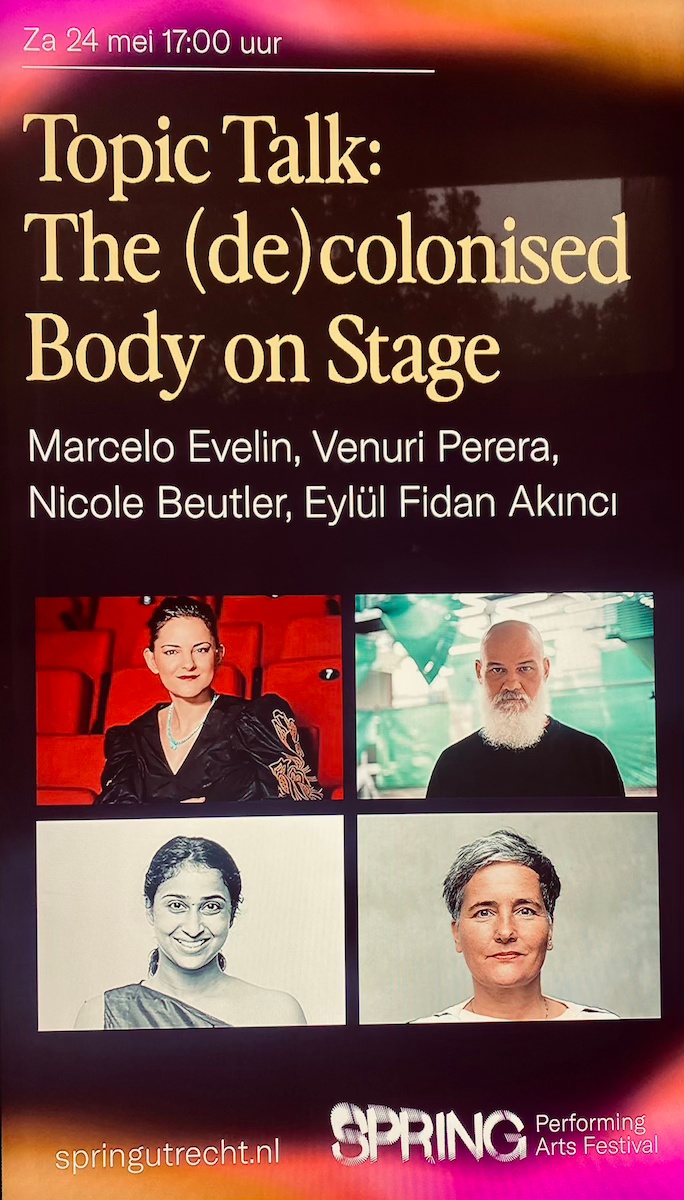
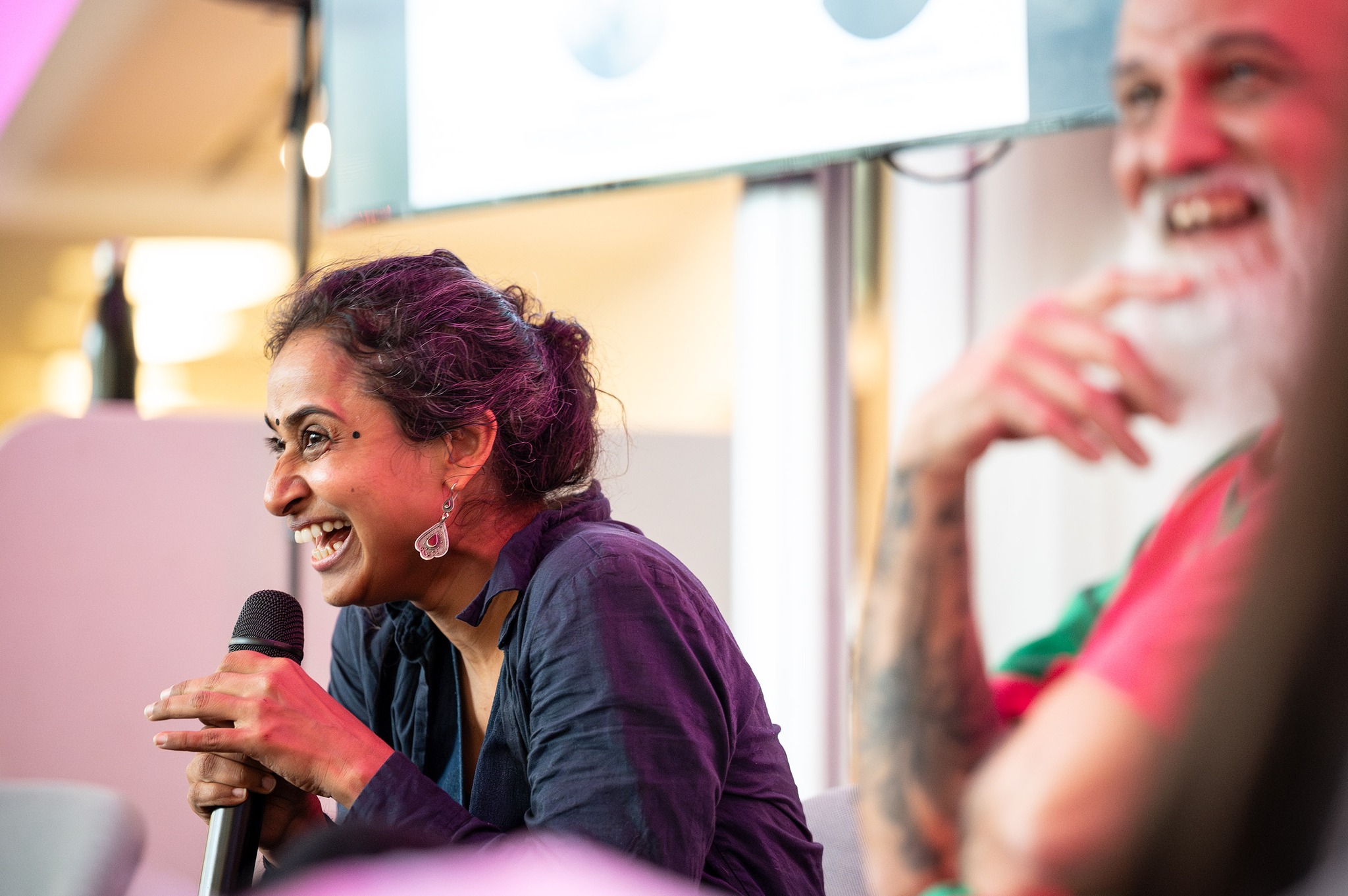
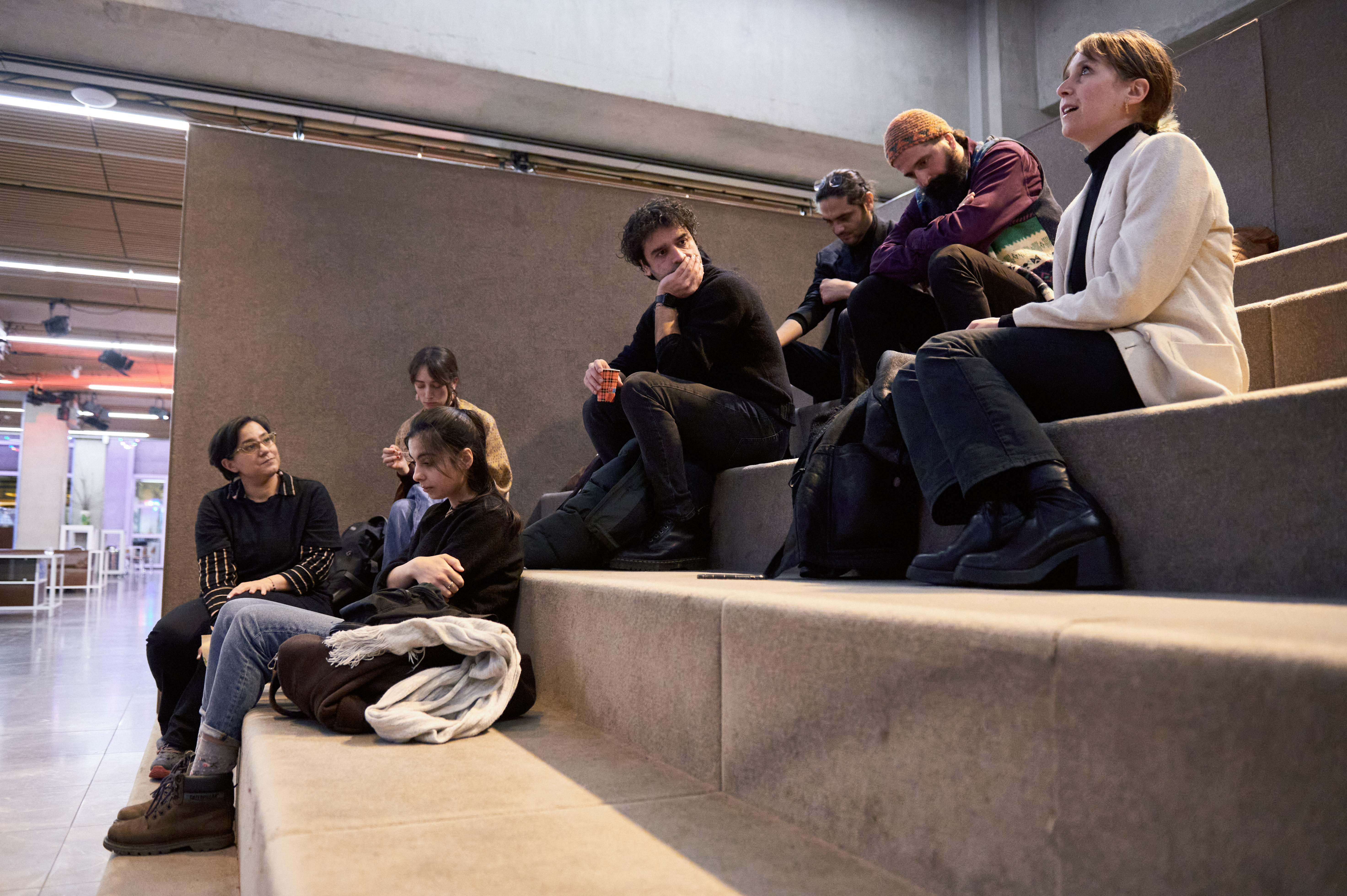
2025. 24 mei. utrecht. SSB. Topic Talk. The decolinised body on stage. Marcelo Evelin. Venuri Perera. Moderator Eylül Fidan Akıncı. Photo: Allard Willemse 
2025. 24 mei. utrecht. SSB. Topic Talk. The decolinised body on stage. Marcelo Evelin. Venuri Perera. Moderator Eylül Fidan Akıncı. Photo: Allard Willemse 
2025. 24 mei. utrecht. SSB. Topic Talk. The decolinised body on stage. Marcelo Evelin. Venuri Perera. Moderator Eylül Fidan Akıncı. Photo: Allard Willemse 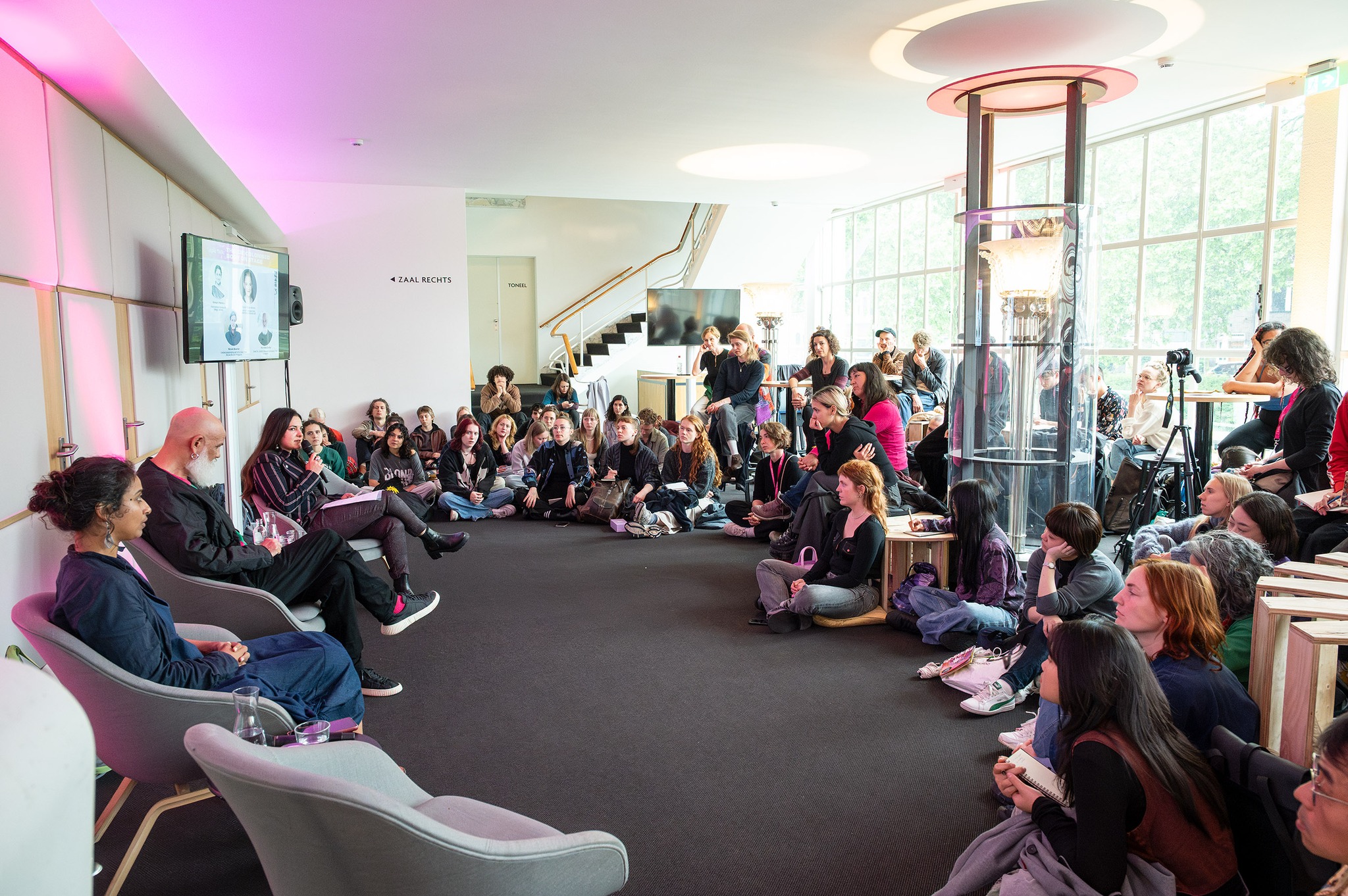
2025. 24 mei. utrecht. SSB. Topic Talk. The decolinised body on stage. Marcelo Evelin. Venuri Perera. Moderator Eylül Fidan Akıncı. Photo: Allard Willemse
The (de)colonised Body on Stage
It is not unusual anymore to speak up about colonial pasts and present examples of occupation. But what shifts when we speak of bodies rather than nations? When bodies with histories of colonization—past or present, or living with the ongoing reality or fear of it—take the stage? How does this dynamic unfold when the audience is primarily from a white Western background?
It was such a treat to be talking to artists who have long inspired me with their art and ethics. Equally rewarding was the incredibly attentive and enthusiastic audience who filled the foyer on a rainy afternoon, joining in our questions, interventions and laughter with full generosity. This day was one of those in which I strenghtened my belief in the power of conversations, imaginations, actions for creating a future beyond oppression while seeking justice for the past.
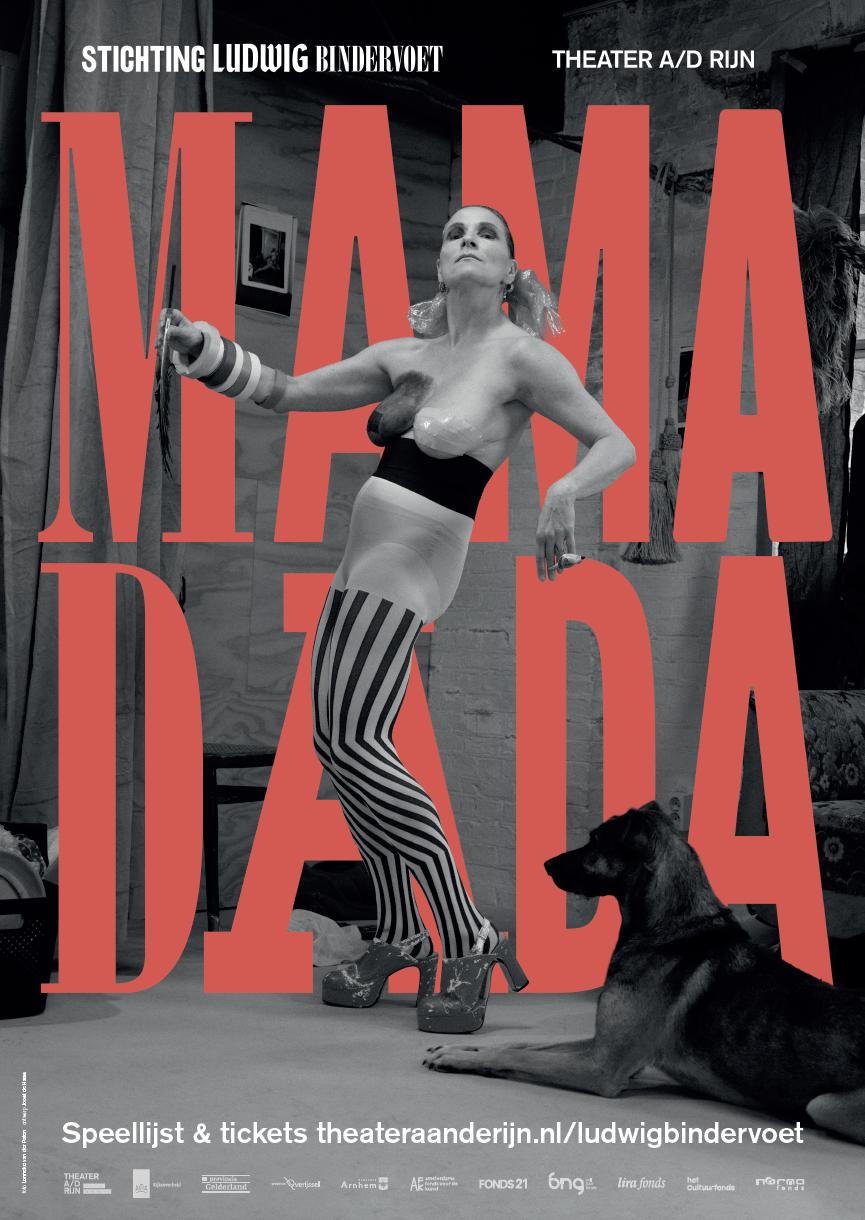
MAMA DADA by Ludwig Bindervoet
Lust for life and freedom against all odds: The poetry and art of Baroness Elsa is coming to flesh--probably for the first time--thanks to
Ludwig Bindervoet's MAMA DADA.

I had a wonderful experience as a dramaturg and conspirator under Ludwig's direction. I am grateful to him for letting me infuse my researcher persona into this loving mockery of art history on stage. Elsa is yet another heroine of what I'd call "lonely girl phenomenology:" She is so unafraid to take her creative powers to its radical ends, so thirsty for affection without compromising her dedication to truthfulness, so fierce in her search for brilliance and expression. And she came into my life when I exactly needed such a northstar.

And what an honor it was to work with Ellen Goemans in the making of this piece. What a monstrous gift has Elvis De Launay brought us. And how generous it is of Irene Gammel to grant permission to share the results of her meticulous research.
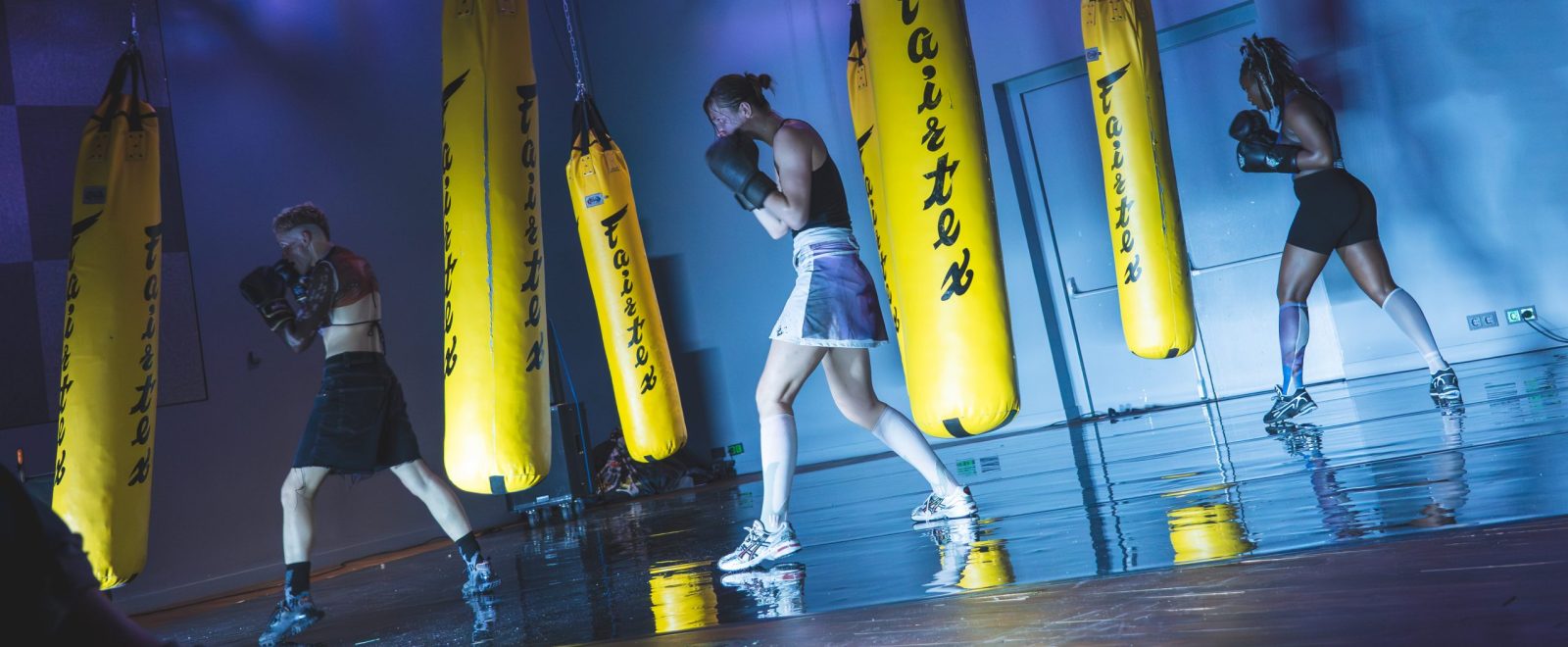
Coerced & Freely Given by Merel Severs
“Because emotion’s just so terrifying the world refuses to believe that it can be pursued as discipline, as form.” –Chris Kraus

There are so many languages hidden in this performance. For there are so many texts that inspire and infiltrate into its poetic weave, and as many speakers who were invested in its making process. There are thoughts and speech acts in different mother tongues that are nested in the global compromise of English. If you listen closely to the slips and silences, or try reading the lines out loud, you may hear the unsettled translations. Speaking of hidden languages–the title Coerced & Freely Given hints at legalese. In legal terms, what can be coerced or freely given is consent, often invoked to determine the circumstances of intimacy and power between people. But the consent that Merel Severs refers to is different.

What this consent belongs to hides from plain sight but sits right here among us: The world we live in. Its pains, vices, and incongruousness in handing them out are so limitless that naming them or depicting them ends up being completely disheartening or banal. The things we see and hear on stage dance around an invisible mountain of misery, without needing to enlighten or convince us of its existence. Instead, the proverbial villain seems to be that very knowledge itself–our being overdosed on it. We are forced to accept or willingly embrace a fiction that cloaks as inevitable, a screen to negotiate our relative security with assaults on our conscience on a daily basis, a mantra to somehow continue without going batshit crazy. We know it all about the world and nevertheless continue as if we didn’t, and we call that artifice “the reality.” And it depends on, yes you guessed it, our consent.

Merel already urged us: Try not to know what you know. Now she is done with imploring; now she erodes the object and the means of that consent. What starts as a tacky mirroring of immediate reality, with all the gestures and words that construct it, soon gets taken apart blow after blow. The outcome of fighting is not simply empowerment, if at all, but the demolition of righteousness, identity, and self-enclosure for the fighter herself. The fight, then, becomes a form of reaching outside one’s body, to the other, to us. The tense, excited, fatigued flesh carries an urgency of truth that interrupts our tacit agreement about civility. The well-disciplined expression of rage becomes an act of surrogacy–how feminine–for a violent response that we rarely claim the license for. Surely, it is possible to feel implied as though this aggression was directed not on behalf of us, but at us. But then so may its exhaustion, so may its mutation into a new opening.

What this new opening could mean is left to the power of your imagination, and it is a candid invitation: Will you allow this poetic machine work on your sense organs without relying on grammars of recognizability? What does it let you utter inside your body? How would you deal with losing the contours of individuality and being a part of a yet unknown community? How would you build a home in a language to come? How will you grieve the certainty of powerlessness, of being inconsequential, and arrive at care ever unfinished?
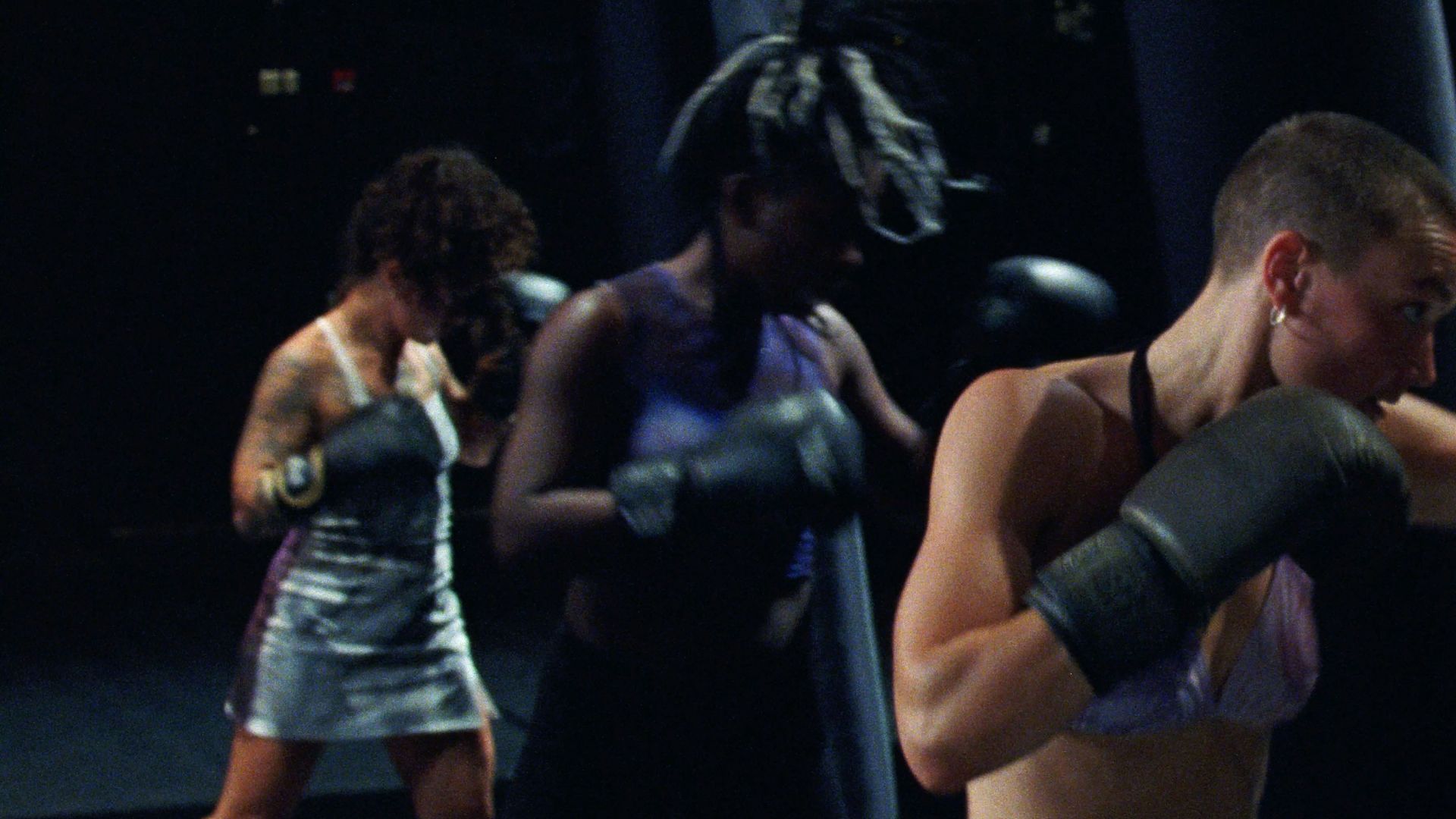
To Be Present but Sometimes Forgotten by Merel Severs
TO BE PRESENT AND SOMETIMES FORGOTTEN is a cinematic adaptation of Merel Severs’ latest stage performance, Coerced & Freely Given (2024).
Three performers train themselves and each other to be able to sustain the violences of the world and reclaim space for vulnerability and anger through a system of care and togetherness. Known for her unique fusion of choreography and martial arts, Severs explores the body’s resilience, vulnerability, and capacity for resistance in the face of societal and political pressures.
This initial film experiment revisits and reimagines the material of her stage work, offering new and contrasting perspectives on the human body under duress. Through poetic visuals, and recomposed choreographic, and textual materials, Severs invites the viewer into a visceral experience of care, anger, and tenderness.
Developed during a virtual residency by Nederlandse Dansdagen, this cinematic piece is an invitation to join her in reflecting on the process of creation and experimentation through film and live performance.
Theater a/d Rijn, Arnhem
Premiere:
November 2024
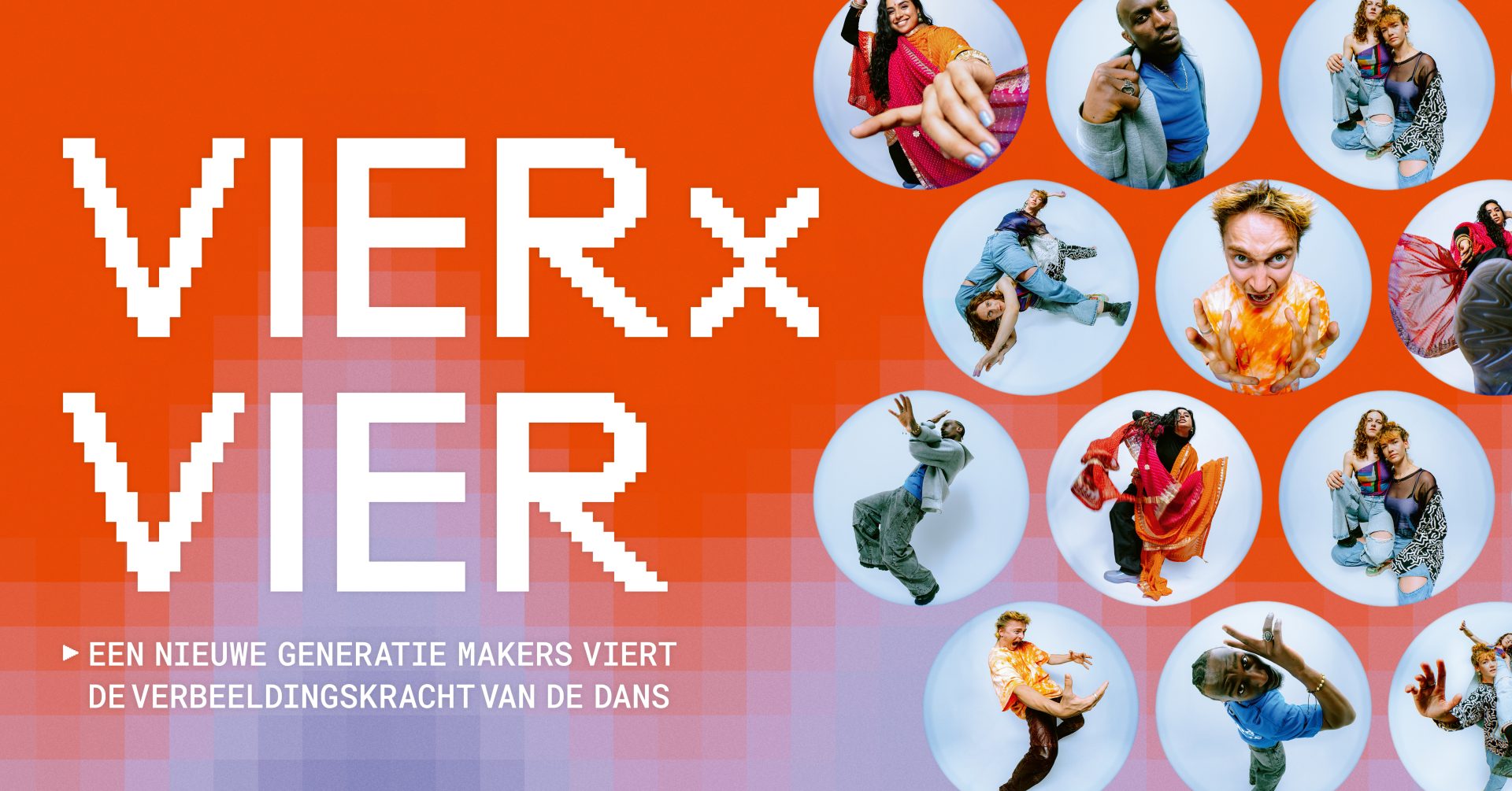
VIERxVIER
VIERxVIER is an evening-long showcase offering young movement artists a platform, while deepening Generation Z (+14) viewers’ appreciation of dance. Every step of the project is an opportunity for expanding and celebrating what dance can be today and in the future.
For the first edition of VIERxVIER (23/24), we curated the line-up by invitation. Over four weeks, Jefta Tanate, Laura Daelemans, Charles Pas, and Cheroney Pelupessy developed 15-minute performances spanning solo to trio work, from Indonesian trunajaya tradition to mime. Jefta Tanate expanded his piece into Domeless (see above); Cheroney Pelupessy toured “Tari” in a double bill; Charles Pas reworked “VAI VAI” for an all-female cast at De Parade and Over het IJ, later developing Requiem For A Young Soul with KC Nona, set to premiere in 2025. Meanwhile, Laura Daelemans took “Tales to Disturb” international, winning an award at the Stray Birds Dance Platform (Taipei), being selected to perform at the International Performing Arts Project in 2026 (Seoul), and advancing to the Teatri Riflessi semi-finals in Sicily (July 2025).
Building on the pilot’s success, the next edition of VIERxVIER (24/25) introduced an open call, receiving 84 applications from the Netherlands and Belgium—highlighting the need for such a platform. Selection was based not only on quality and originality but also on diversity of genre, intermedia use, and youth-relevant themes. This edition further refined the four-week structure and fostered exchange between the participating artists. As before, this edition’s artists—Amisha Kumra, Peeled Collective, Niek Vanoosterweyck, and Ibrah Silas Jackson—are from different backgrounds and regions, of different ages, and work with different dance styles and dramaturgies. Amisha’s piece greets the audience and invites them onto the stage floor to directly feel her solo’s beats, while Peeled Collective immerses the bodies in duet and in the auditorium with poetic images through a mobile projector. Niek Vanoosterweyck partners with a responsive laser, creating a fantasy world akin to Japanese anime. Ibrah Silas Jackson bookends a shadowboxing choreography of teenage angst by a comedic storytelling between three boys in the park. Strong reviews and the tour’s success reaffirm the value of presenting such distinct practices together, thus developing the knowledge and taste of audiences all over the Netherlands.
This project has been a wonderful laboratory to question what dance can be and what contemporaneity may look like. I will always cherish the joy of exchanging and working with these eight movement artists as they deepened their practice and vision of choreography. VIERxVIER confirmed my conviction that, as nonverbal and specialized it can get, dance is such a powerful and universally appealing form of expression and collectivity.
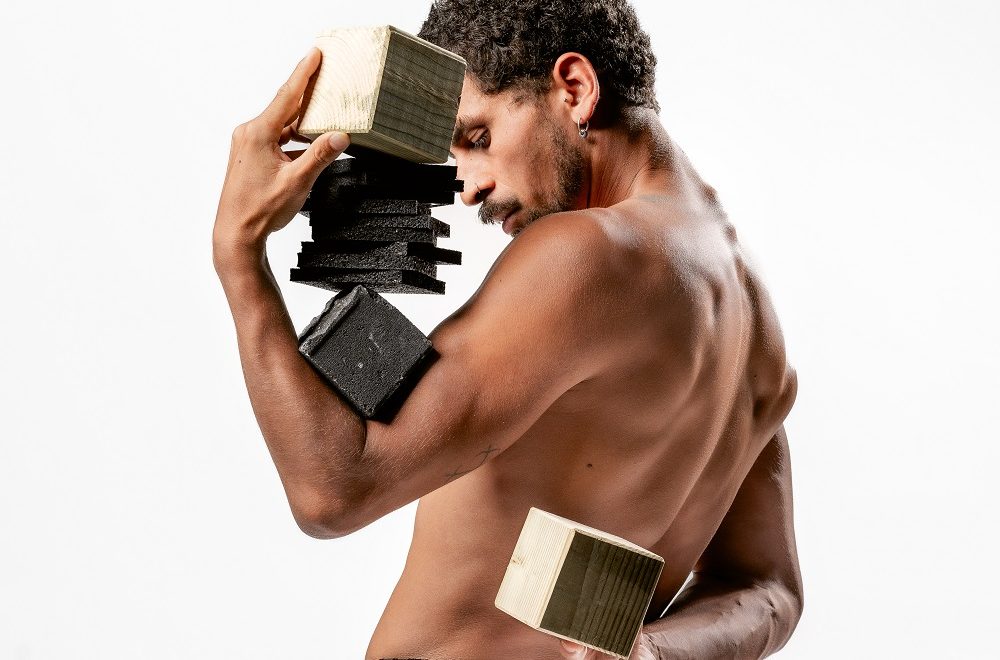
Domeless by Jefta Tanate
This was Jefta's first evening-length choreography, and our first collaboration. As we got to know each other and echanged our notions of storytelling through movement, I had a great time working with him and his exciting dancers. The work resonates with me the most on how immigration and search for home troubles the already-complex family and gender dynamics. I admire Jefta's generosity in invoking his father's memories as well as in sharing this piece at several homeless and elderly shelters.
Audio Choreography:
A Performative Assemblage of Public Space
In this practice-as-research presentation, I shared the project history, research, and outcomes of the Audio Choreography series (2021-ongoing), devised and performed by the Istanbul-based dance company Taldans. Audio Choreography series is a group of audio-interfaces we designed for several imaginary and real sites, which consist of movement prompts to be executed by the audiences. In February 2021, we were invited by Omar Rajeh and Mia Habis--the founding artists of Maqamat Dance Company and the curators of Beirut International Platform of Dance Festival--to create a cluster of artistic events in Istanbul. Their overarching frame was called "Architecture of a Ruined Body," which was inspired by not only the pandemic lockdowns but also the cascading destruction of Lebanon with the ammonium nitrate explosion in Beirut in 2020. The continuing urgency of rethinking and reclaiming the public spaces in Turkey, too, has motivated us to mature this project into a performance method, which we continue to adapt to various public, industrial, and natural environments.
Performance Studies international Conference #29, University of London.
Date:
22 June 2024
The Performance of Funga
I moderated the conversation with mycologist Giuliana Furci and artists Sara Manente and Augusto Corrieri on fungal studies, performance and ecological consciousness.
Vrije Universiteit Brussel-VUB Crosstalks.
Date:
22 May 2024
The Spider and the Crab, the sequel
This edition of the Dramaturgy Seminar threads the needle of a dramaturg's lateral moves: I talked about my journey from academic research and freelance dramaturgy in Turkey and the United States to working as a resident dramaturg in production houses and as a teacher in higher education in the Netherlands. I analyzed the differences between participating in co-creation and mediating artistic processes with institutional ideology. What are the disappointments, fears, and failures surrounding the dramaturg's function today in a minefield of competing desires? This examination provided an opportunity to revisit the reflections of the previous generation of Euro-American dramaturgs to see how much of their doubts and disclaimers about aesthetics, identity, knowledge, and authority still hold true. Finally, I discussed how my research and teaching on ecology and necropolitics bring political agency to my dramaturgy practice.

Dramaturgy Seminar @ Dansens Hus, Oslo.
Date:
13-14 April 2024
What is scenography to dance, and what else can it do?
This round of Someone you should meet: Conversations based on reading together and collective studio visits I focused on scenography as a framework for dance and performance theory. Staging is more than adorning or giving information about place. Even more specific to choreography is the crucial role of spatial perception. Last but not least, the Anthropocene condition is making us more aware of the ontological-political power of landscapes. Connecting these insights together, I drew from Rachel Hann’s booklength theoretical study Beyond Scenography, and used my recent research on dance scenographer Nadia Lauro as a case to tinker with. In the first half of the day, we looked at theatre and dance history to speculate on the revolutionary impact of scenographic thinking. Over the last one and a half century, these disciplines actualized an encompassing, kinesthetic, and posthuman sensitivity in each other. The sympoiesis between choreography, dramaturgy, and scenography unleashed each from narrative, rhythmic, and decorative imperatives. How might we be inspired by this history to transform our notion of performance composition? What might be a new philosophy of worlding/grounding in performing arts? In the latter part, we applied these insights into our own current or prospective projects, creating hands-on staging concepts. We explored drawing/modeling/moodboarding scenography drafts in a way that is kinesthetically active and dramaturgically articulate.
PARTS Brussels
Date:
8 April 2024
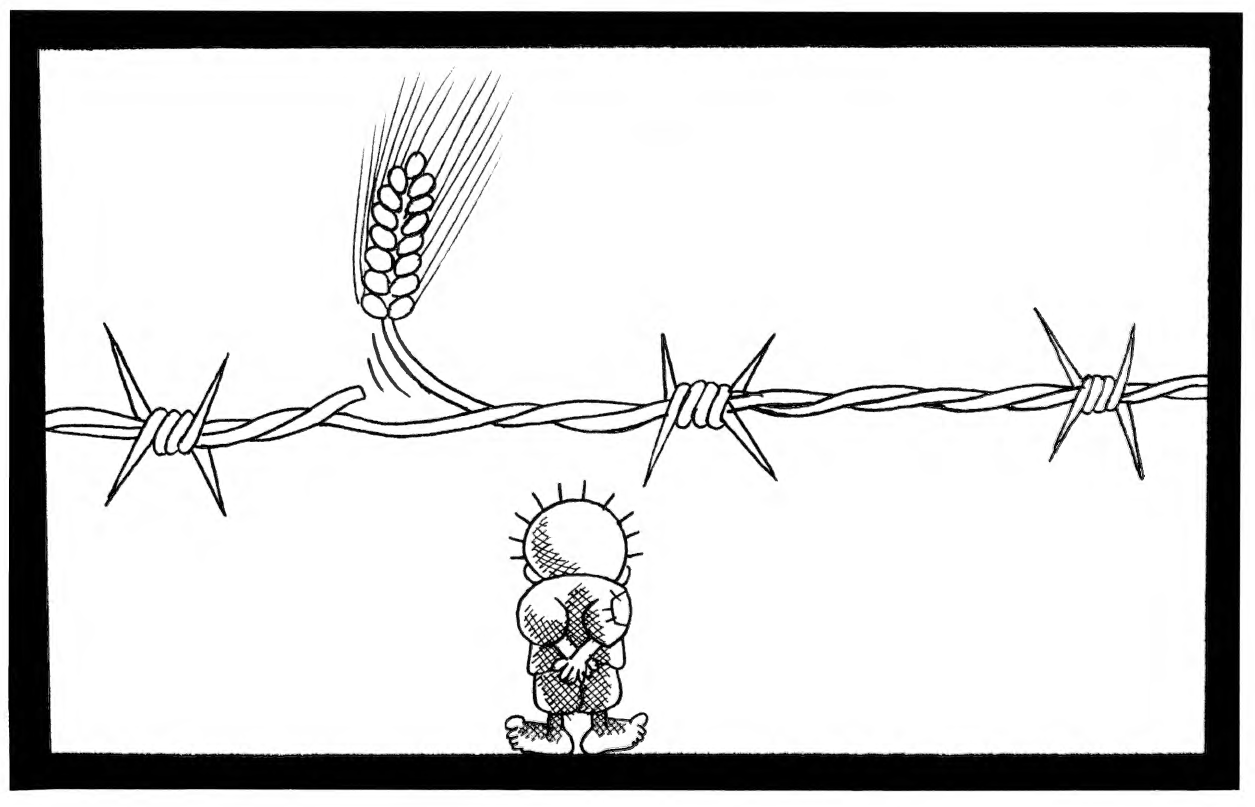
Handala Playreading:
Fundraising and Solidarity for Ayyam Al Masrah and Children in Gaza
Ayyam Al Masrah, also known as Theater Day Productions, has been tirelessly working to run children's theatre workshops in Gaza, the West Bank, and Hebron. Liesbeth Coltof led a nation-wide call to the Netherlands theatre institutions to support them, as their buildings and infrastructure have been destroyed in the war. We came together as two Arnhem institutions to offer our community an evening to reflect on the history, as entangled and incomplete as it is, beyond October 7. But how to speak truth when everyday language fails? We turned to the power of theatre and satire. With the help of dramaturg Giulia Cristofoli, I directed a reading of Abdelfattah Abusrour’s play Handala, the namesake of artist-journalist Naji Al-Ali's cartoon boy who has become a symbol of protest in Palestine. Thanks to brave and dedicated actors (most of whom are students or recent grads from ArtEZ), and Verso's A Child in Palestine compilation on Naji's strips, we brought this wonderfully complex and critical text to have a say on our current moment.

Aesthetics and Necropolitics: Dramaturgical Agency in the 2020s
The title of this talk refers to the book Aesthetics and Politics (1977 [1938-1970]), a milestone debate on the dynamics and function of representation and reality in (Marxist) revolution. I propose to use this extended conversation between four philosophers and a theater maker–Bloch, Lukács, Benjamin, Adorno, and Brecht–as an inspiration to formulate some dramaturgical questions for us. For us, millennials and Gen-Z who live in equally unpredictable times with unprecedented means, who have concurrent reckonings with coloniality, neofeudalism, planetwide ecocide, genocidal wars, and extreme virtualization of the public sphere. What are the imperatives and impacts of rethinking aesthetics in performance today? How can we make our dramaturgies more capacious? How can we generate creative forms of political agency on stage in the face of state-sanctioned coercions over humans and nonhumans? Less of a lecture, more of a puzzling together.
I had the incredible opportunity to curate the Dag Dramaturgie for Festival Cement '24. Following this lecture, I performed an unrehearsed dialogue with my comrade Judith Blankenberg on our dramaturgical practices. We wrapped the day with a dramaturgy practice workshop for the participants, whose enthusiasm was phenomenal!
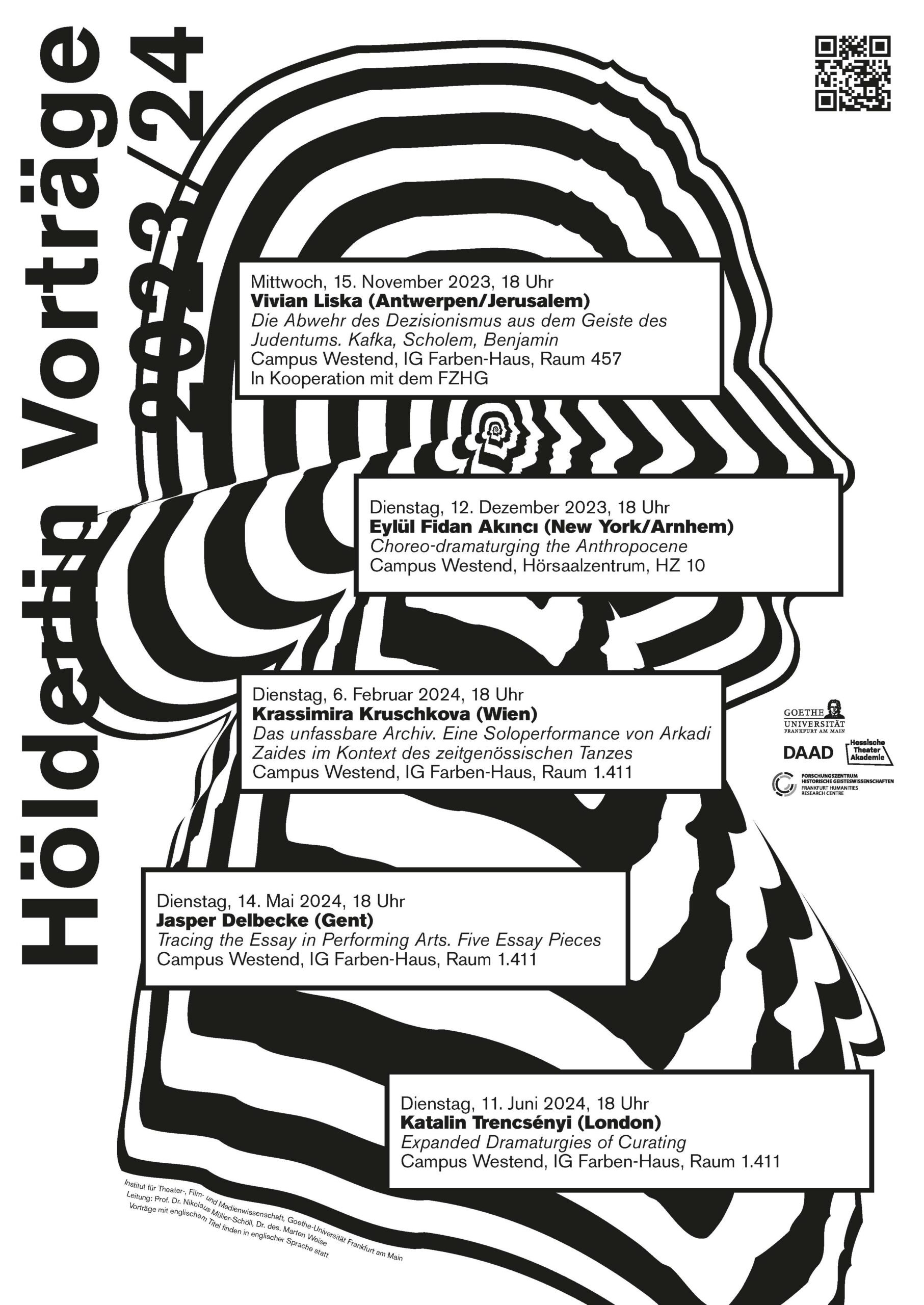
Hölderlin Vorträge:
Choreo-dramaturging the Anthropocene
The new climatic regime is manifest in our lives with an unprecedented urgency, but the planetary damage has been ongoing for much longer. Likewise, ecological activism and discourse have a global history, while we are groping for resistance and solace within a politically and digitally induced amnesia, obfuscation, and denialism. These are only the starting conundrums of what I consider to be characteristically the Anthropocene episteme. By positing the Anthropocene as a crisis of sense and sensibility, this lecture argues how performing arts has a unique advantage to figure, rupture and radically transform this widespread yet unevenly distributed doom scenario.
I outline the intricate web of choreographic and dramaturgical frames for articulating and activating ecocritical communities and courses of action. Drawing on works of Pina Bausch, Eiko Otake, and Mette Ingvartsen among others, I demonstrate how the choreographic experiments within the past half-century have allowed us to recognize and negotiate with nonhumans in their autonomy and agency, in their meaningful mattering. Inextricably, the dramaturgies of these works have opened a counterfactual space, where ambiguous and interdependent relations can be discussed, violence readmitted, and the audience implicated beyond gesture or codified participation. Through assemblages of immersion and alienation, the spectators are corporeally primed for cognition, representation, and debate. Through this overview, I question what the Anthropocene forces contemporary performance to do: Double-bound in fires, deluges, and plagues of tragic proportions, how do our stages address multiplicities in which nonhumans are equally sensuous, autonomous, mobile subjects of history?
It was such an honor to deliver the outcomes of my doctoral research and the seminar on ecodramaturgy among a cohort of excellent scholars. I am extremely grateful to Professor Nikolaus Müller-Schöll for his trust and support.
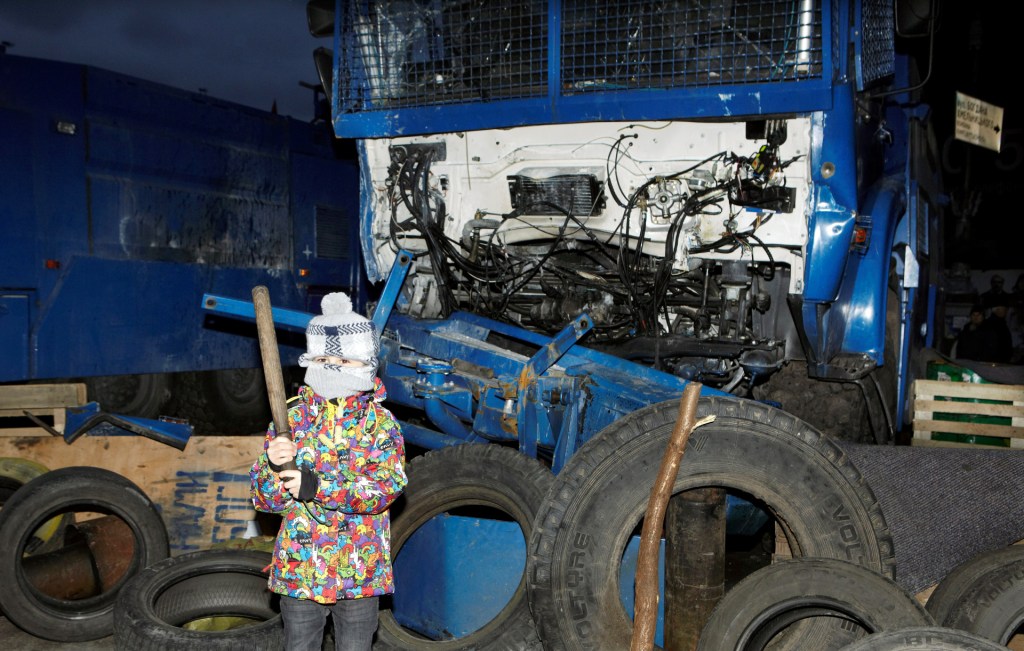
BLA BLA BLA ACT NOW 2.0
In October 2013, WUNDERBAUM created a reconstruction of the Warsaw climate summit out of anger and amazement. We are now eight climate summits on and we are taking stock again.
The word ‘Fly Shame’ arose, The European Climate Act was passed, Urgenda won its lawsuit against the Dutch State at the Supreme Court, Greta Thunberg inspired millions of young people worldwide, and well-known Dutch people joined radical action groups occupying motorways.
Meanwhile, the effects of global warming have become increasingly palpable, extreme heatwaves and floods are the order of the day. But political ideals still seem to be losing out to economic interests. The mood is gloomy if not very gloomy and panic is starting to set in.
Working closely with a mega-cast of actors, dancers, and natives of Rotterdam, TR and WUNDERBAUM pose the inescapable question: Is it too late?
An evening of self-confrontation that must inevitably take place, because: there is no Planet B.
When Matijs Jansen asked me if I'd like to think along in the revision of the piece, I didn't take a beat to say yes. What kind of a performance would generate a visceral experience of the Anthropocene disintegration? WUNDERBAUM's acclaimed performance is a wonderful test site to think further about the function and method of ecocritical performances. Reimagined after what can be called “a decade of post-truth” (Trump’s election and the U.S.' withdrawal from Paris agreement, COVID-19 pandemic, Russia's war on Ukraine, the generalized AI…), Bla Bla Bla Act Now 2.0 has the opportunity to focus on the nature of truth and doubt in the way of acting for collective destiny.
Devised & Written by
Dates & Location:
9-10 November 2023 20:00 | Theater Rotterdam
More:
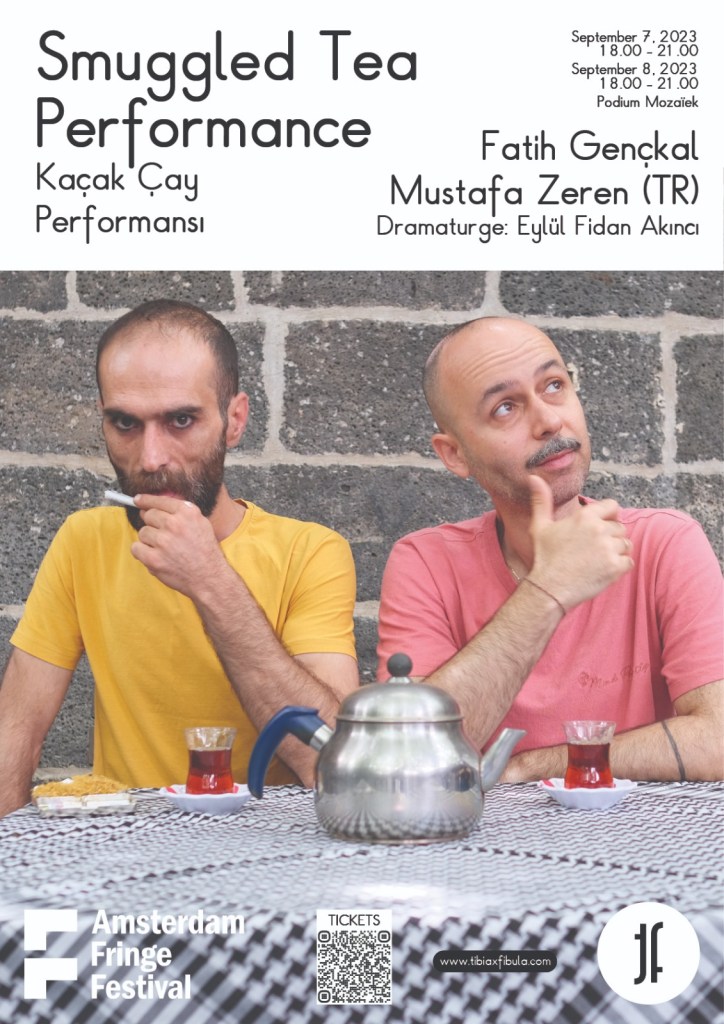
Smuggled Tea Performance |
Kaçak Çay Performansı
Smuggled Tea Performance is a playful mise-en–abîme of the impossible collaboration between a Turkish and a Kurdish artist within the complex sociopolitical landscape of Turkey. Fatih Gençkal and Mustafa Zeren embark on an extraordinary journey of making a dance performance together despite the power inequalities and economic struggles that permeate their lives. Their curiosity in each other’s movements and imaginations rubs against the inertia of physical and creative distances. While they gleefully bump into the difficulties of collective creation as well as the fraught rules of choreography, will they keep the taste of friendship in their tea together?
With gripping courage and transparency, Gençkal and Zeren explore the intricacies and pitfalls of bridging distinct biographies and heritages between İstanbul and Diyarbakır, unashamed of their blind spots along the way. Masterfully switching between personal insights and critical jabs at the local and global art scene, Smuggled Tea Performance confers the vulnerability, responsibility, and determination of two men from the opposite corners of the country as they battle against the overwhelming burdens of making and sharing dance in Turkey today.
My dramaturgical contribution was subject to the same impossible conditions of the making of this piece. Even though we could never be in the same room, I felt fully present as I sent provocations and wove together the performance score over miles and years via a variety of digital communication devices. And maybe because of that, the saga keeps on writing itself.
Devised & Performed by
Fatih Gençkal & Mustafa Zeren, with design by Cansu Pelin İşbilen
Dates & Location:
7-8.09.2023
| Podium Mozaïek, Amsterdam
10.09.2023 | Tak Theater Aufbau Kreuzberg, Berlin
23.09.2023 | Arter, Istanbul
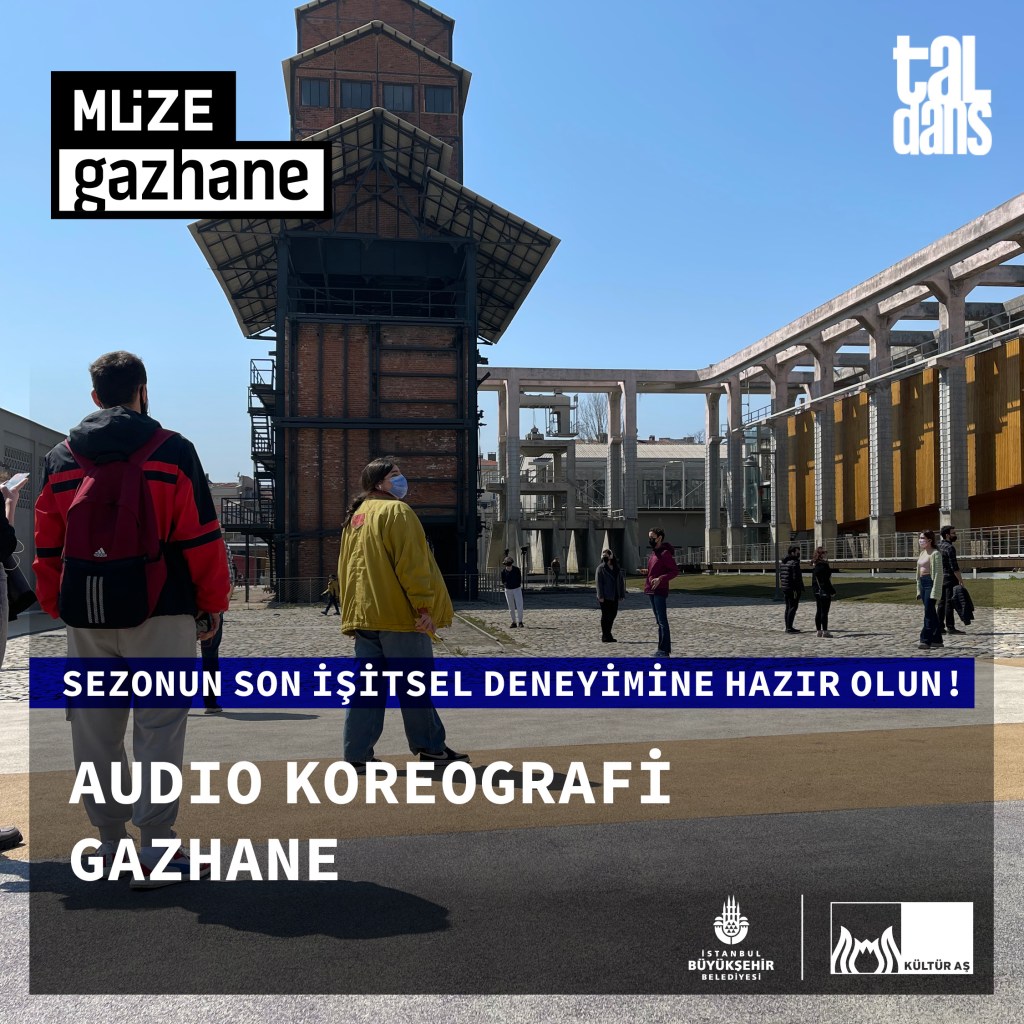
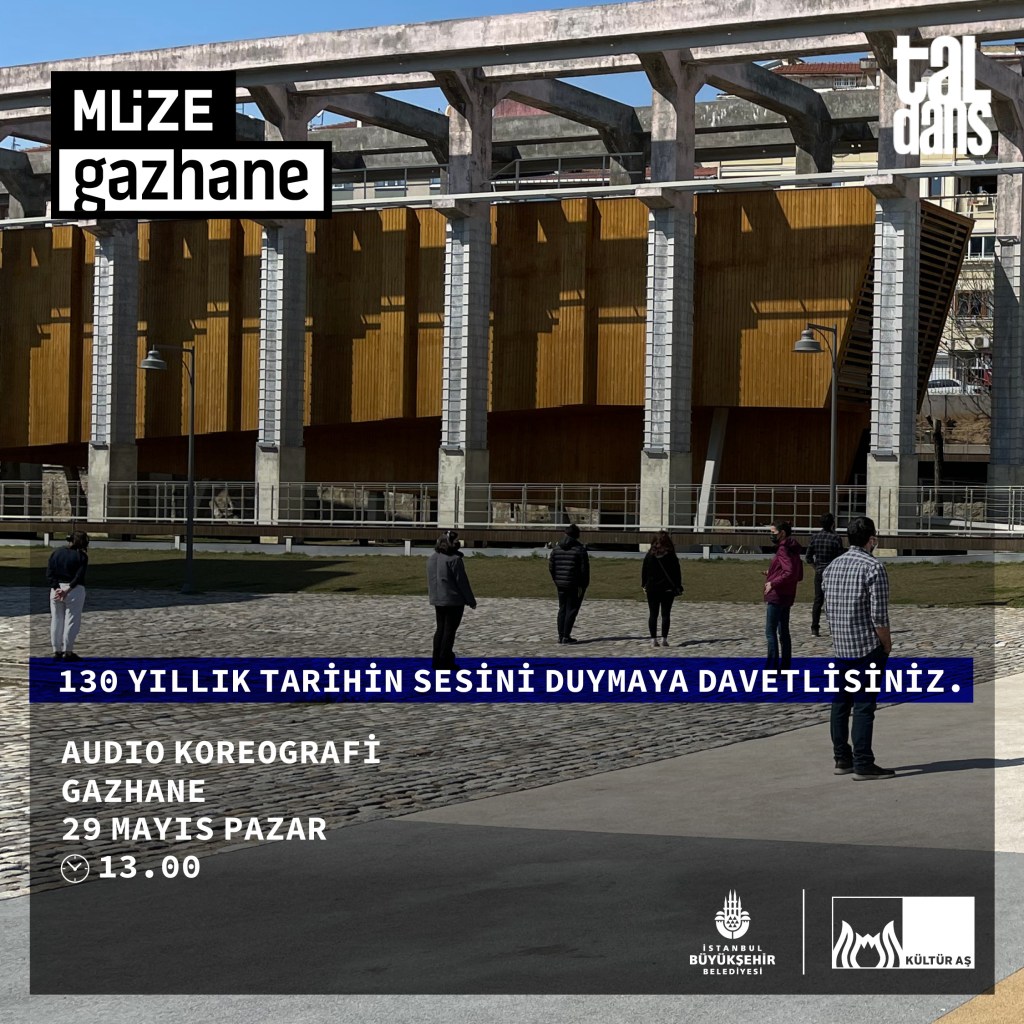
Audio Choreography: Gazhane
I co-choreographed, dramaturged, and dubbed the instructions of Audio Choreography: Gazhane, invited by choreographers Filiz Sızanlı and Mustafa Kaplan. The audio score guides the participants in exploring the architecture, industrial history, social choreography, and the environmental imprint of Hasanpaşa Gasworks Museum, recently offered to public as a culture campus.
This is the second installment of our site-adaptable project Audio Choreography. Starting from our a choreographic desire to take over the desolate public spaces during COVID-19 lockdown, we have been formulating a new methodology of participant-activated movement and embodiment scores for (mostly outdoor) locations. We research the embodied intimacy of imagining prompts, hearing it via the personal interface of earbuds, and exercising the freedom and possibilities of holding and re-forming the collective space. This is an ongoing project with future life in archaeological sites, niche ecologies, and other architectures of industrial heritage.
Concept:
Sound Design:
Sair Sinan Kestelli
Dates:
Sundays,
Fall 2021-Spring 2023
More:
Commissioner:

Choreographing Ecocritical Routes
ACT—Art, Climate, Transition
Choreographing Ecocritical Routes is an ongoing artistic research conversation between Eylül Fidan Akıncı and Tery Žeželj, which culminates in day-long events in Ljubljana and Rotterdam.
Connecting ecocriticism, choreography, and activist practices of place making, this event brings forth performative ways of grieving and reformulating our experience of dwelling in the Earth. How do the artistic practices engage with the sudden disasters or the slow disappearance of beings and places? Designed as an exchange of discursive practices, Choreographing Ecocritical Routes centers on the importance of body, mobility, and space for ecocritical activations in the performing arts. This exchange will take choreographer Eiko Otake’s film A Body in Fukushima as its focal point.
A Body in Fukushima is crafted from tens of thousands of photographs, taken by William Johnston, of Eiko Otake’s improvised dances in the surreal, irradiated landscapes of post-nuclear meltdown Fukushima, Japan. Otake travelled six times to evacuated, desolate Fukushima since the triple disaster—earthquake, tsunami, nuclear meltdown—of 2011. From her second trip forward, she was accompanied by Johnston (also a professor of Japanese history and public health at Wesleyan University) who documented her body in places of nuclear contamination.
In conjunction with the film screening, Akıncı delivers her lecture “Choreo-dramaturging the Anthropocene” to contextualize Otake’s extended performance series as an artistic response in the aftermath of Fukushima disaster. What is the performance artists’ task at the age of Anthropocene? As the public and scholarly conversations tackle the term “Anthropocene” and its propriety to name the geo-ecological epoch we are in, it becomes clear that we need critical and creative tools to retain sight of the planetwide commons of disasters. Akıncı proposes a generative model of how dramaturgical and embodied practices facilitate a new theory and practice to address the planetary.
As a bridge between the film and the lecture, Žeželj will propose a site-sensitive walking activation to recalibrate the mind and body for perceiving things unmourned and unmournable along the path. Combining the audio-walk with a zine, Žeželj invites the participants to reflect on: What is deemed mournable in the contemporary western societies? How are we dealing with ecological grief collectively? Can we mourn for other-than-humans? How do arts make mourning a visible and inviting process? How can mourning cultivate our response-ability?
Join us in this afternoon of interweaving critical and creative discourses around the questions of sensibility, efficacy, and sustainability of performing arts. Open to general public and free.
Co-curators:
Eylül Fidan Akıncı
Tery Žeželj
Dates & Locations:
24.08.2023 |
Bunker, Ljubljana
06.06.2023 |
Theater Rotterdam TR25, Krijn Boon Studio
Special thanks to:
ACT, Bunker, Productiehuis TR, Blaž Pavlica, Eiko Otake, Allison Hsu

EASTAP23 | The spider and the crab: Dramaturgies of moving laterally
The 6th Conference of the European Association for the Study of Theatre and Performance is organized under the theme “Dimensions of Dramaturgy.”
Our curated panel session, The spider and the crab: Dramaturgies of moving laterally, proposes and explores the notion of ‘lateral dramaturgy’; dramaturgy as a practice of lateral movement and, in turn, moving laterally as a dramaturgical practice. We are especially interested in the doings, knowings and embodyings of dance and choreography within their infrastructures, alongside the complementary movements of undoing, unknowing and disembodying those infrastructures.
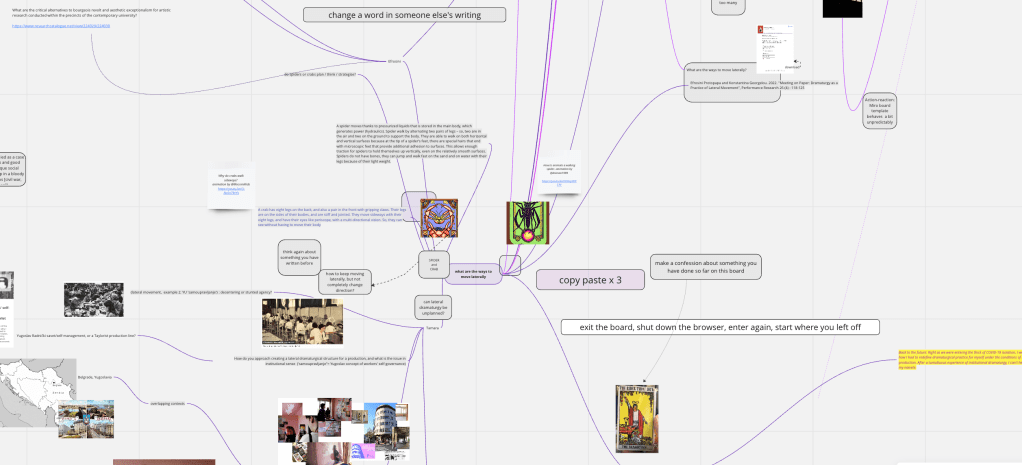
Go to our interactive Miro board
Moving laterally, sideways, refuses the centered, the linear and the directed, possibilizing decentring, incidentalness, inconsistency and opaqueness in knowledge and attention. In our aim to resist the anxiety of reasserting knowledge, and to suspend knowing by maintaining what is present, we are also searching for ways to move with our research sideways. We acknowledge that this takes place in western educational institutions and organisations where moving/thinking is mostly expected to be progressive and where laterality is usually associated with thinking creatively (often referred to as thinking ‘out of the box’), but rarely contributes to reconfigured or inconsistent directions or actions thereafter.
One of our basic questions then is ‘How do we move/think laterally?’; how might we be doing this in our individual yet interconnected practices – of making, collaborating, curating, dramaturging, writing – but also in the ways that we come together in research presentations such as this one. Our individual contributions will draw on recent practice research to raise questions around attention and (in)visibility, collage and fragmented narratives, institutional unruliness, unquiet belonging and experimental collaboration, as well as – inevitably perhaps – the micro-politics of speaking/thinking along each other.
I contributed with my experiences of moving laterally across academia, education, and arts institutions. Swinging between stand-up comedy and confessional, I tried to make sense of my maneuvers as a  performance researcher and production dramaturg, and of my attempts to formulate robust structures of care and labor for institutional dramaturgy.

I also did an artist talk with Marina Otero after her show FUCK ME at ILT Festival!
Panelists:
Konstantina Georgelou
Efrosini Protopapa
Tamara Tomić-Vajagić
Eylül Fidan Akıncı
Date & Location:
14-18 June 2023 |
Aarhus University
Info:
Not All Is Lost
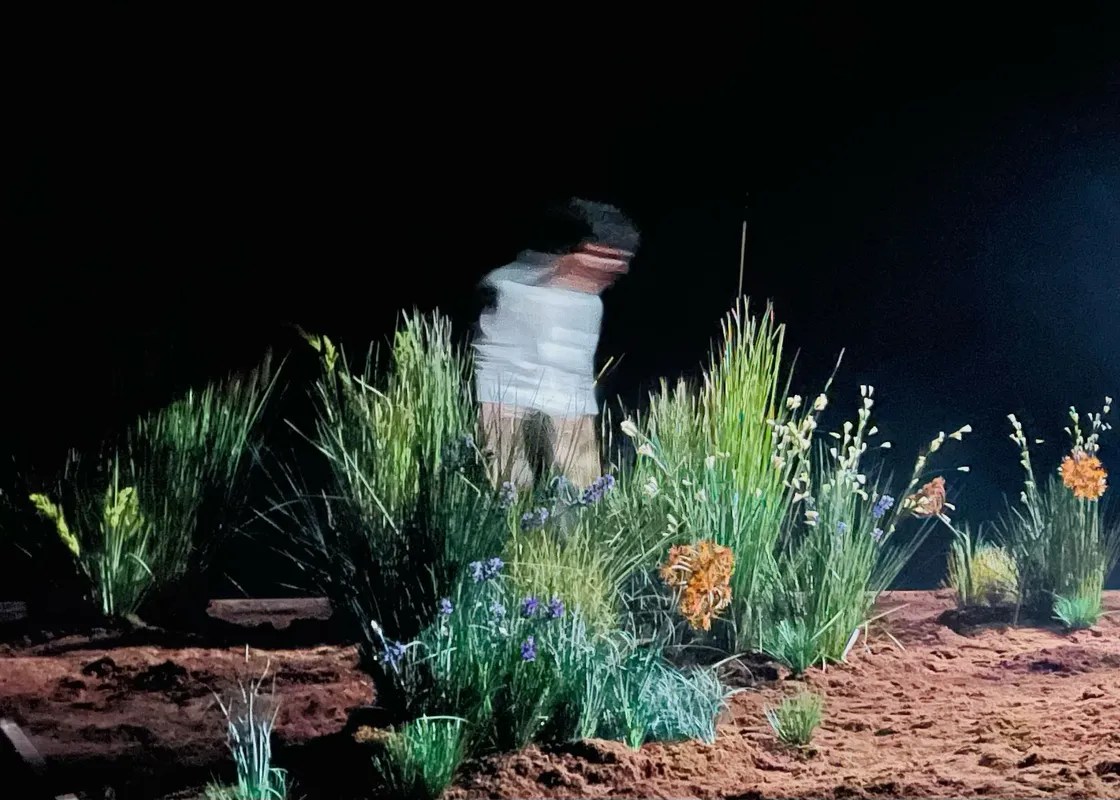
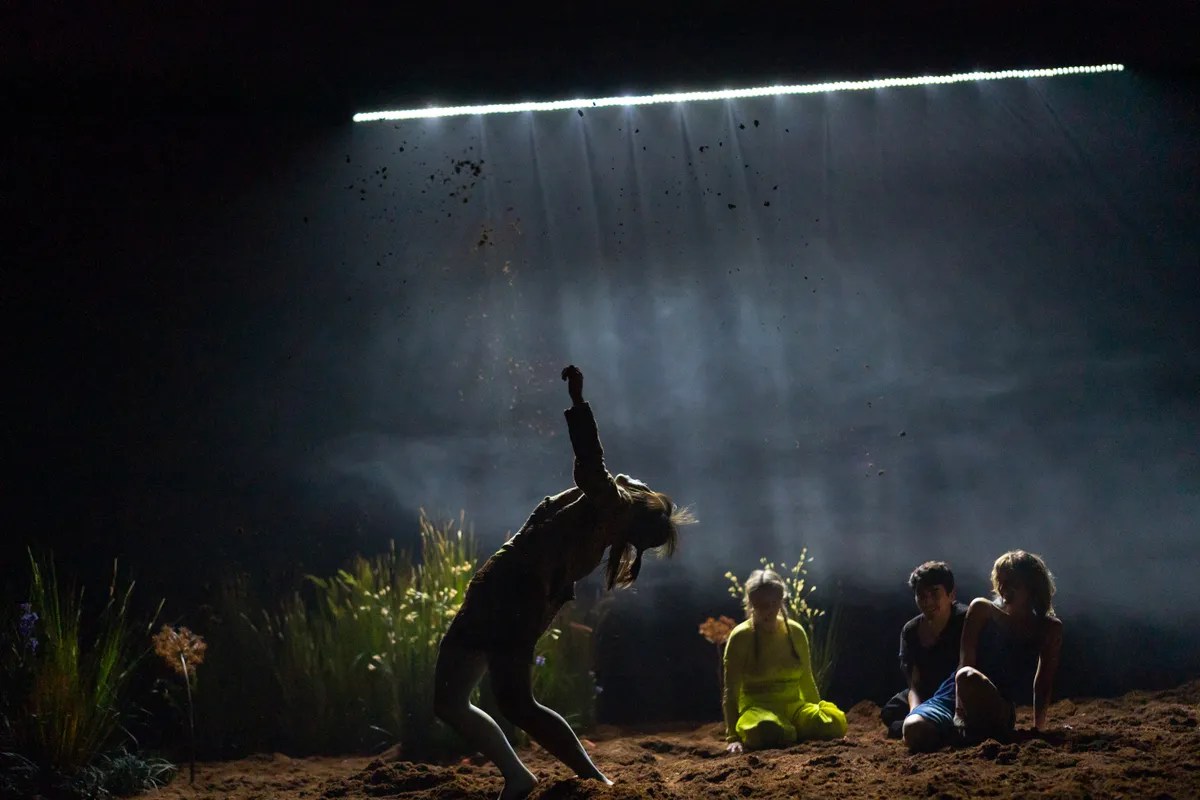
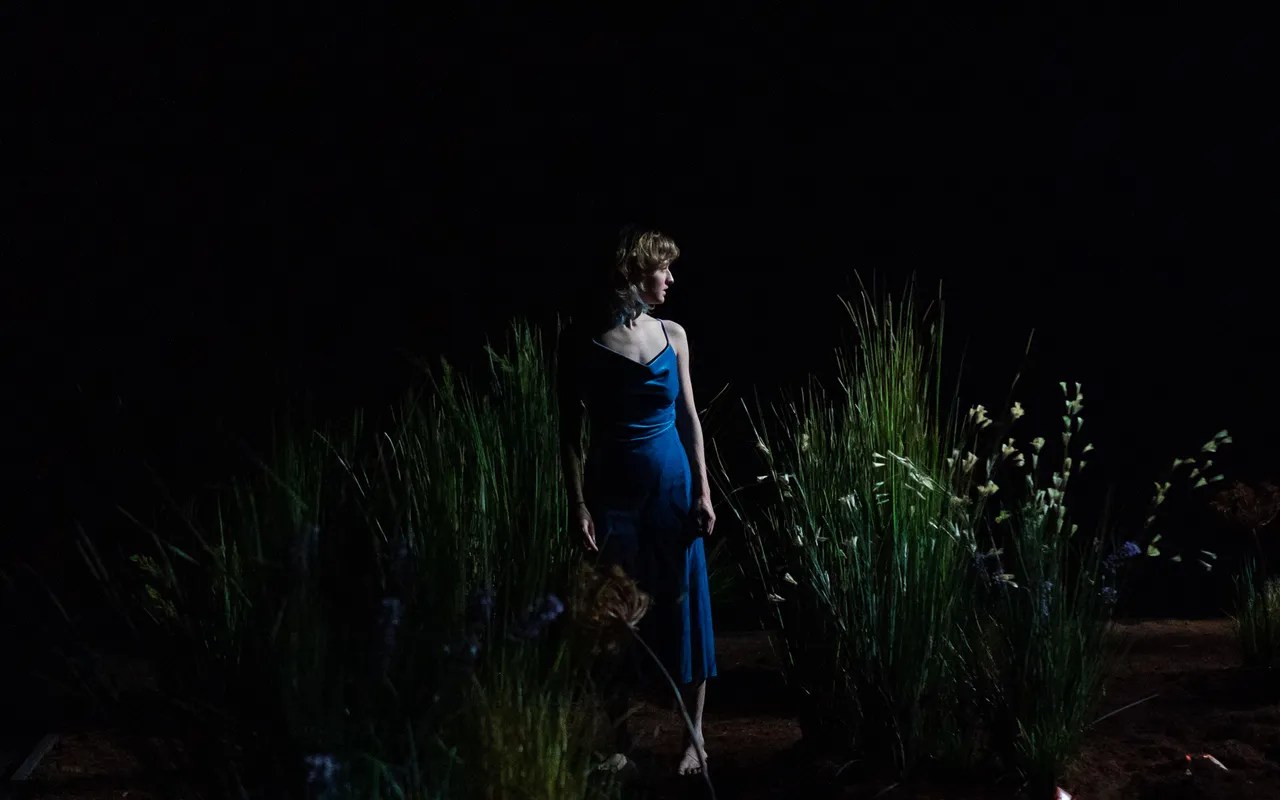
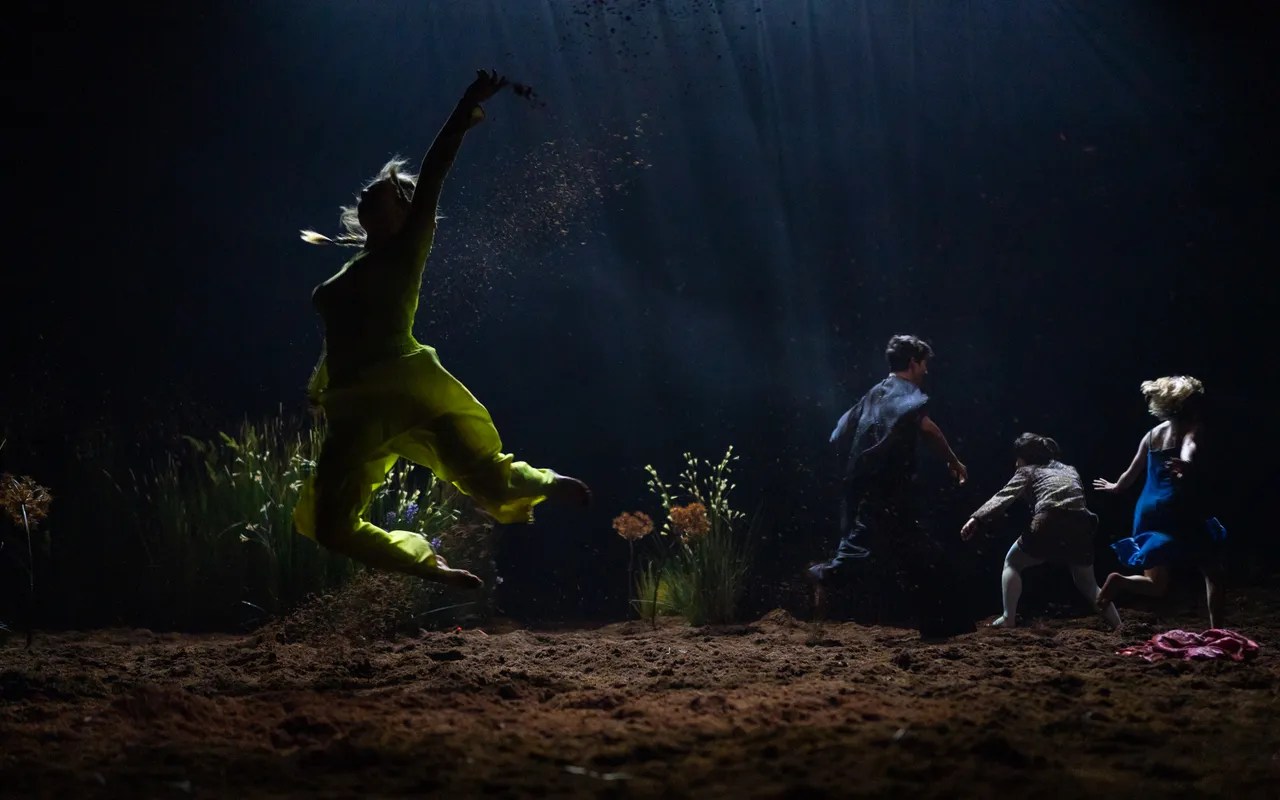
Since June 2022 I work as dramaturg for Not all is lost, a physical theatre performance by Davy Pieters “about bodies caring for other bodies. About the power of our mutual interdependence. About our fragile need for the other. What does it mean to care? What does it mean to be cared for?”
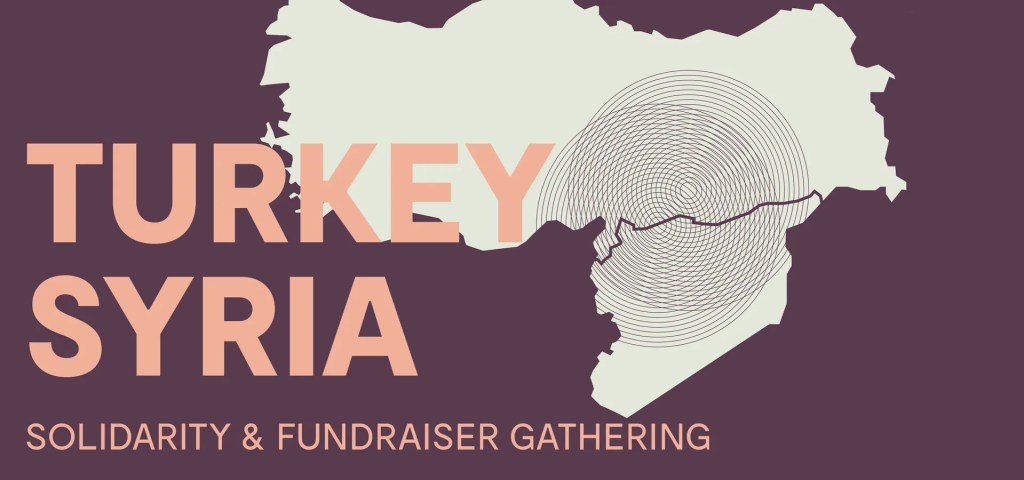
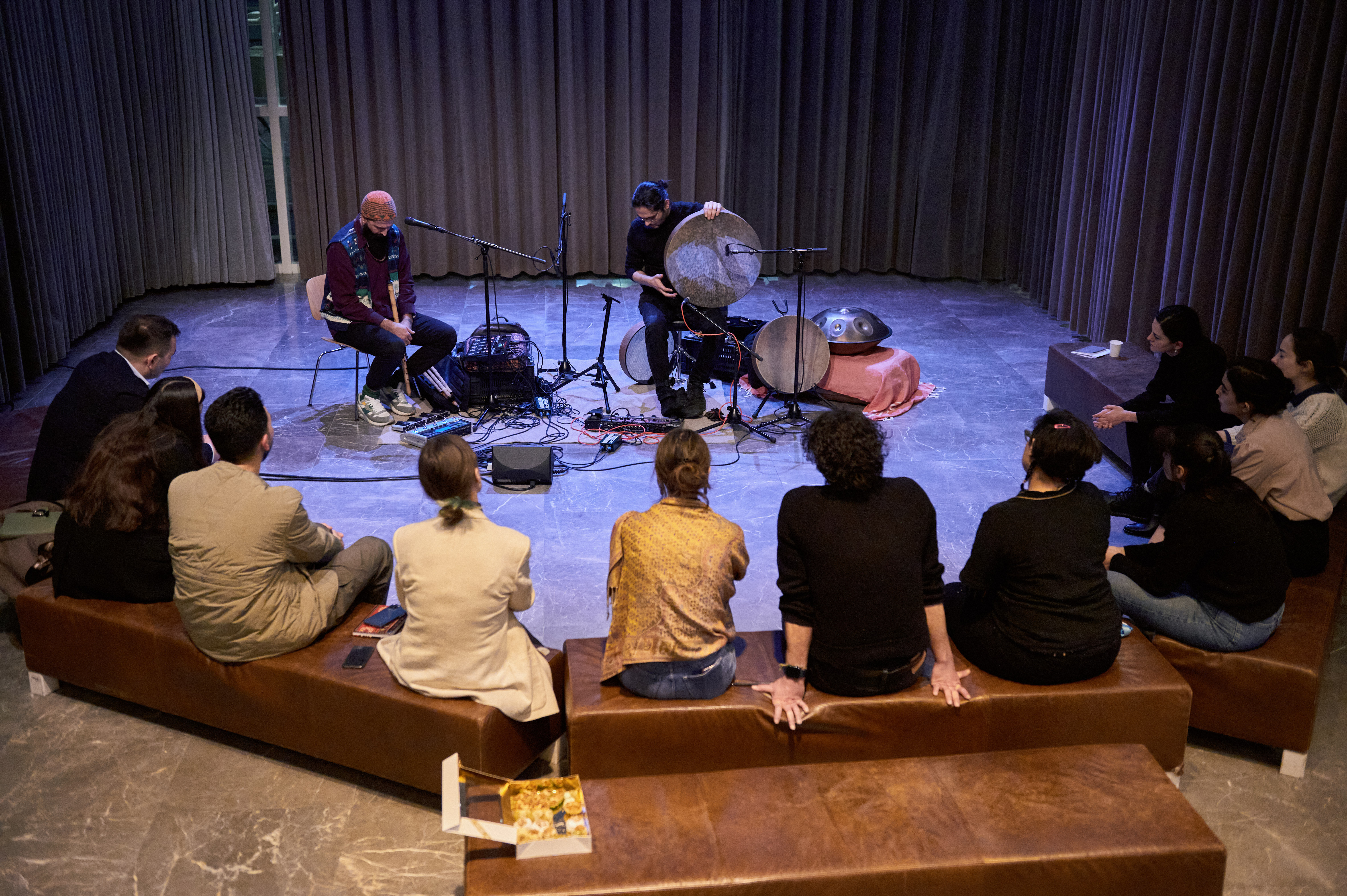
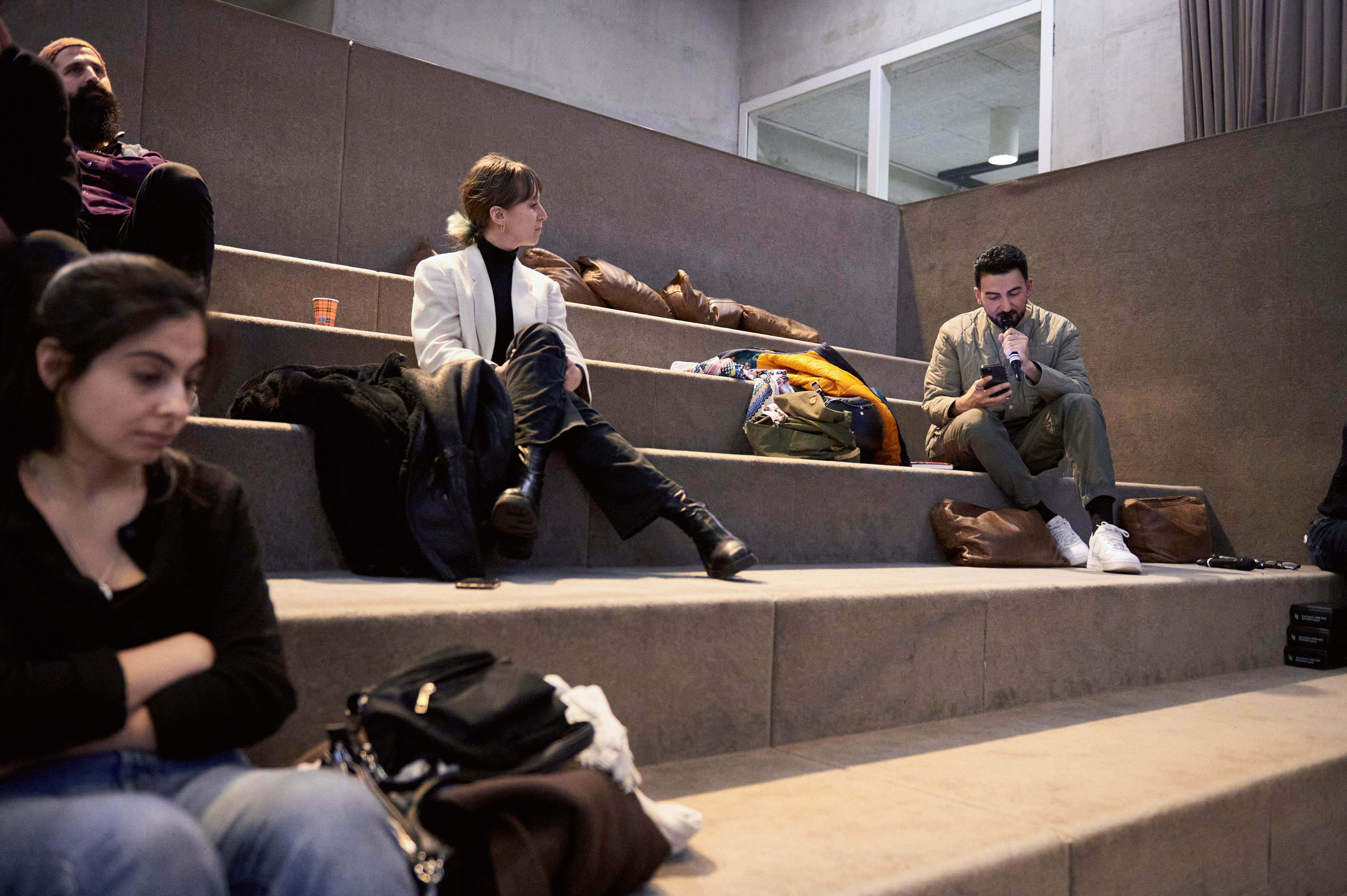
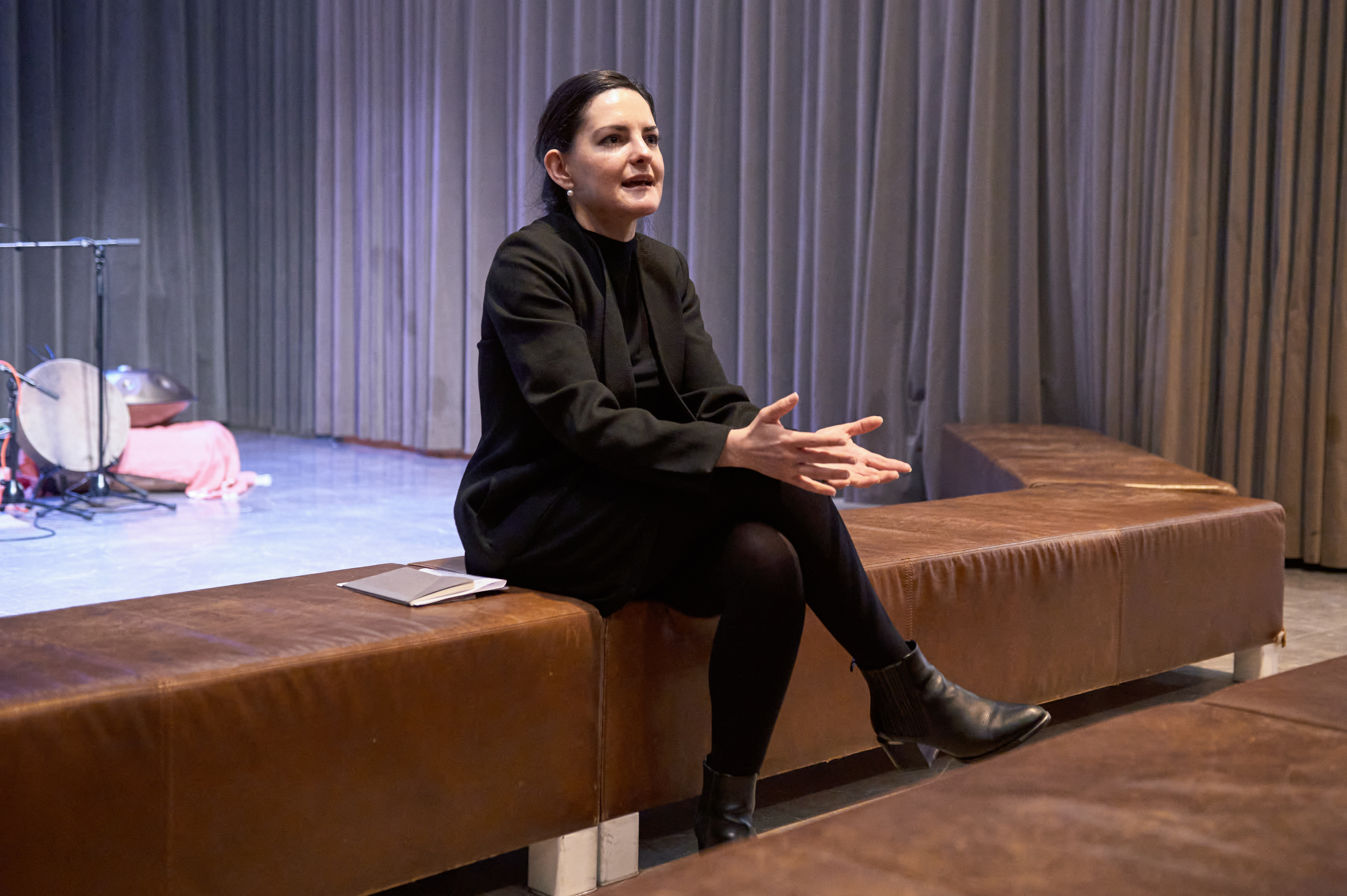
Solidarity with Turkey and Syria
I was lost in the grief and weight of the double-earthquake of 02/06. Being a diasporic citizen brings its own schizoid fake-coping and guilt trip. The last decade had opened so many other wounds while I was away from home and alone. But at least now I had a chance to find my own public. I wanted Theater Rotterdam to provide me and orphans like me a place of collective mourning. A forum where we could discuss our emotions of pain, fear, and anger. A recording device for Turks-Kurds-Syrians and the other sympathetic folks to listen to each other.
With Belit Sağ, Sinan Arat, Modar Salama, Hasan Gök, Davy Pieters, and Salih Kılıç, we were able to hold space for dealing with the incomprehensible scale and stupidity of this semi-natural-humanmade disaster.
I want to thank Eiko Otake for teaching me how to do that all through the years since Fukushima triple-disaster.
I am indebted to Walter Ligthart for granting this wish, and for commissioning donation to LGBTQI+ earthquake relief in Turkey and Syria.
In collab with:
Theater Rotterdam
Date:
26.02.2023
More:
Graphic & Photos:
Jeroen Van Diesen & Salih Kılıç
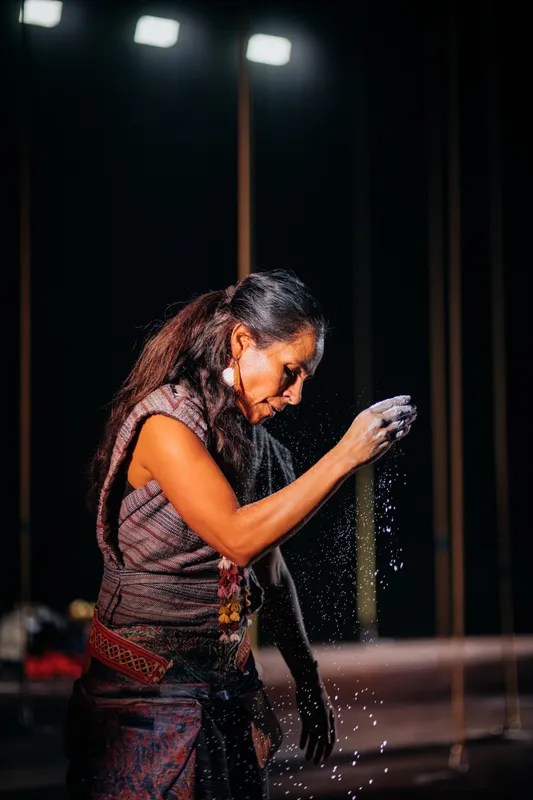
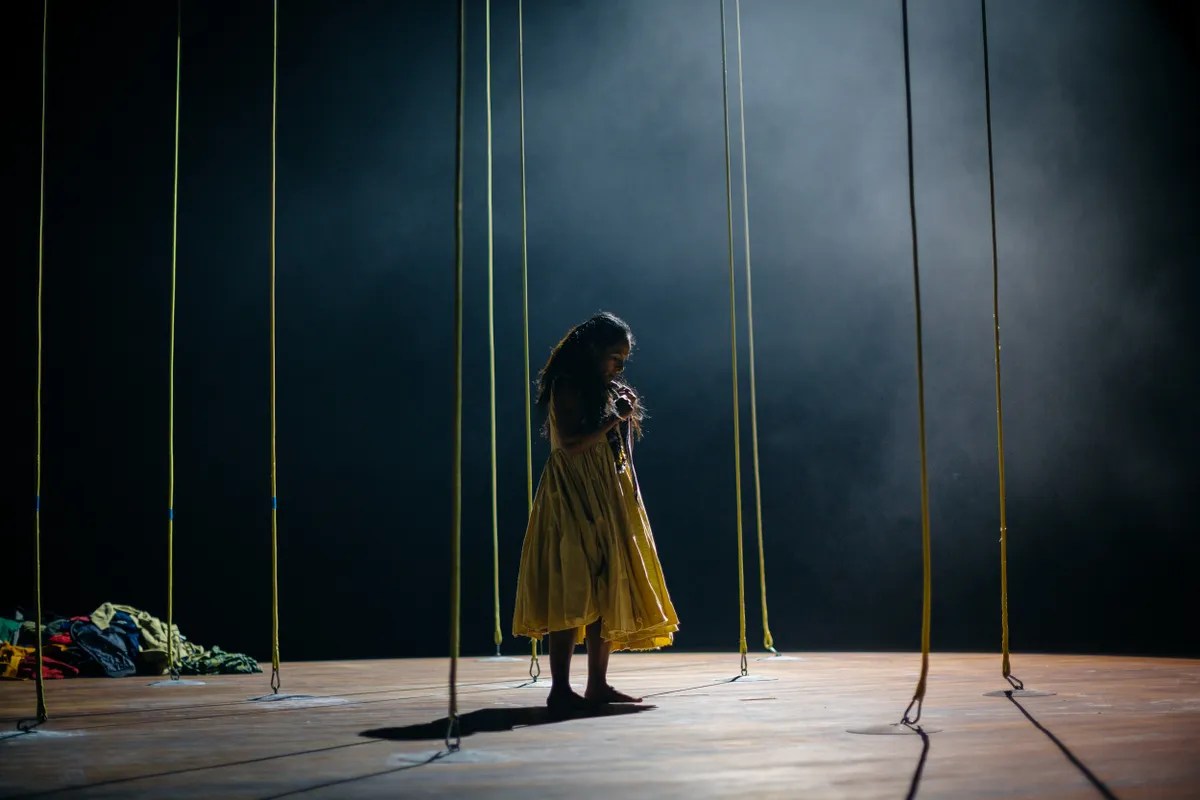
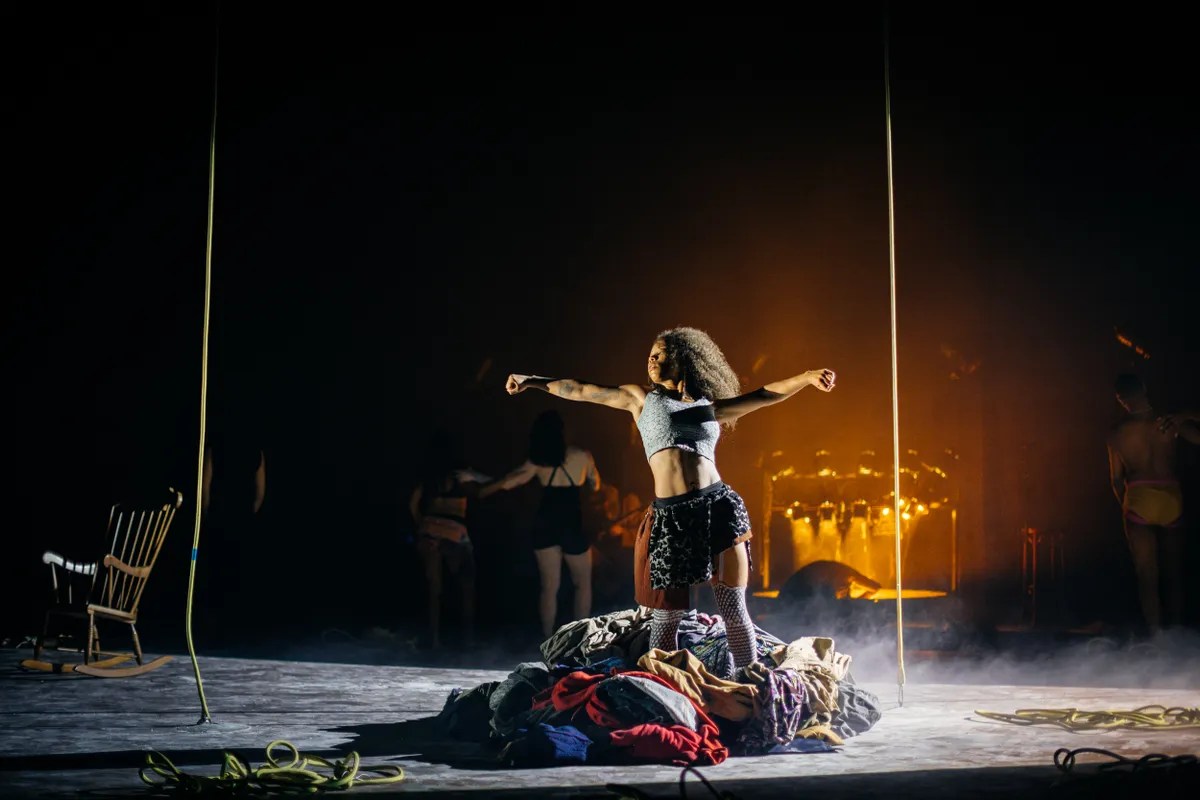
Primisi
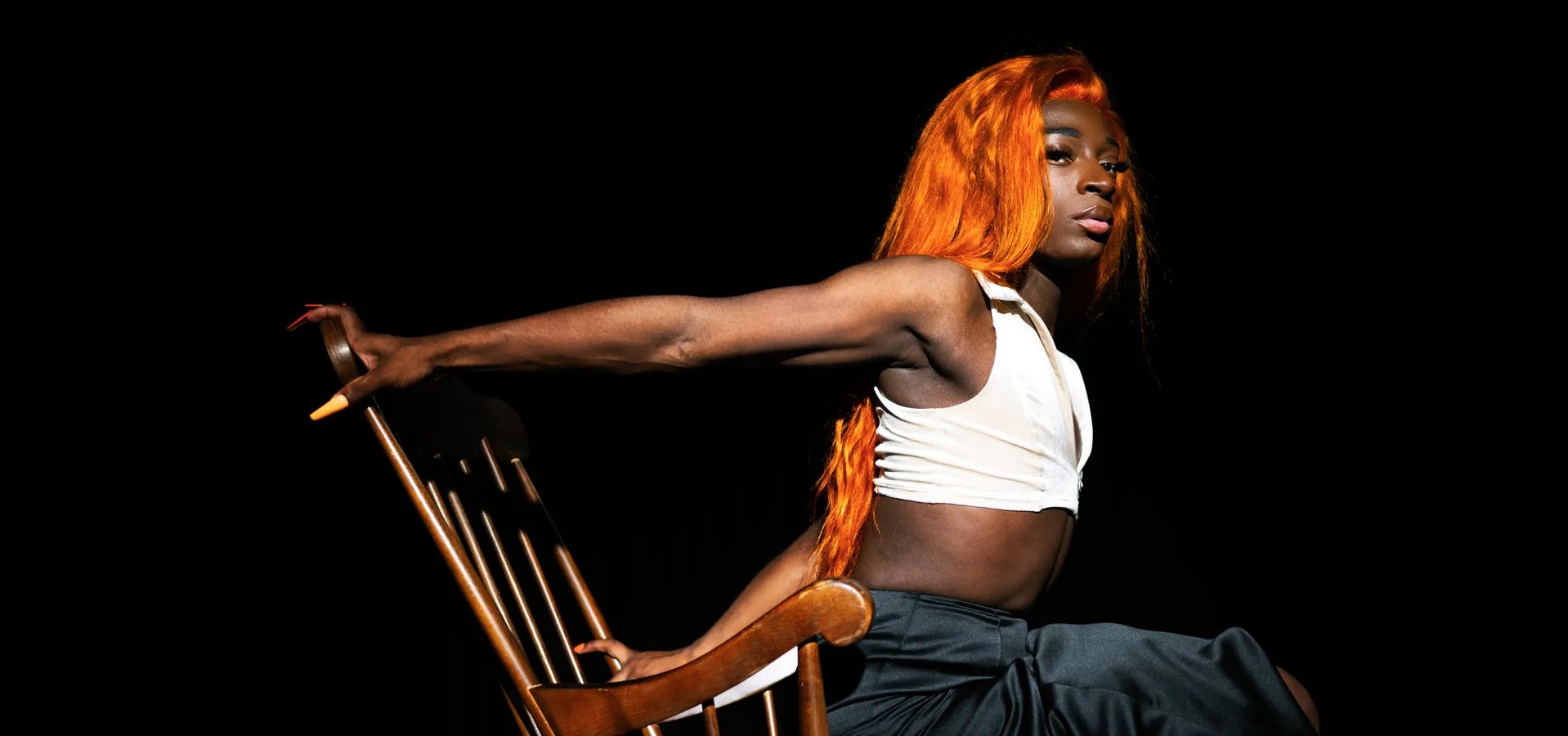
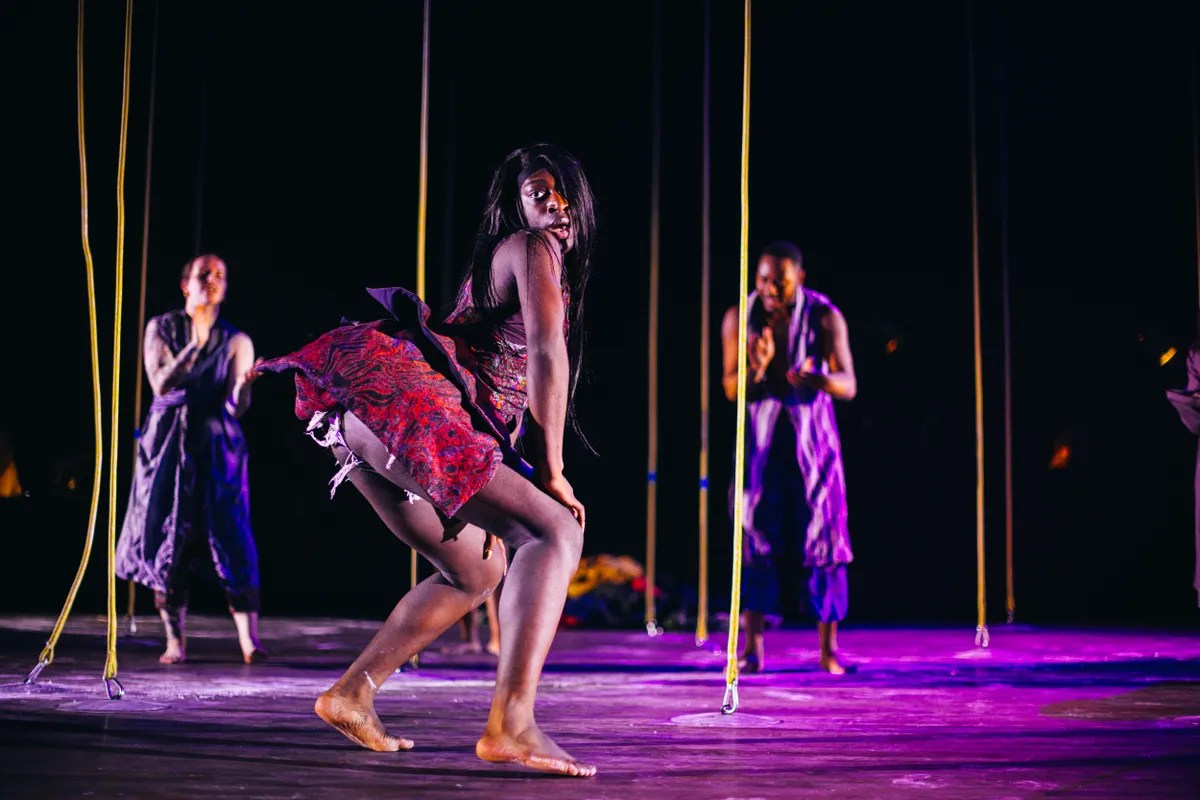
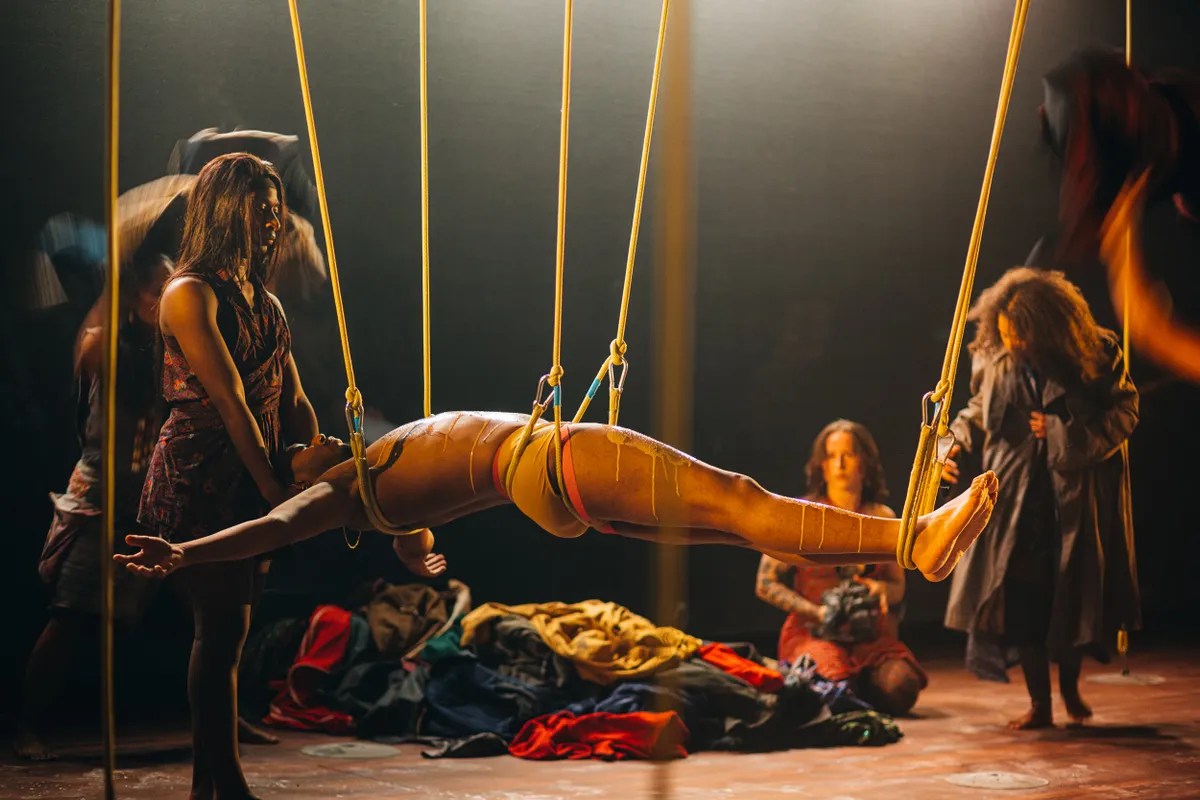
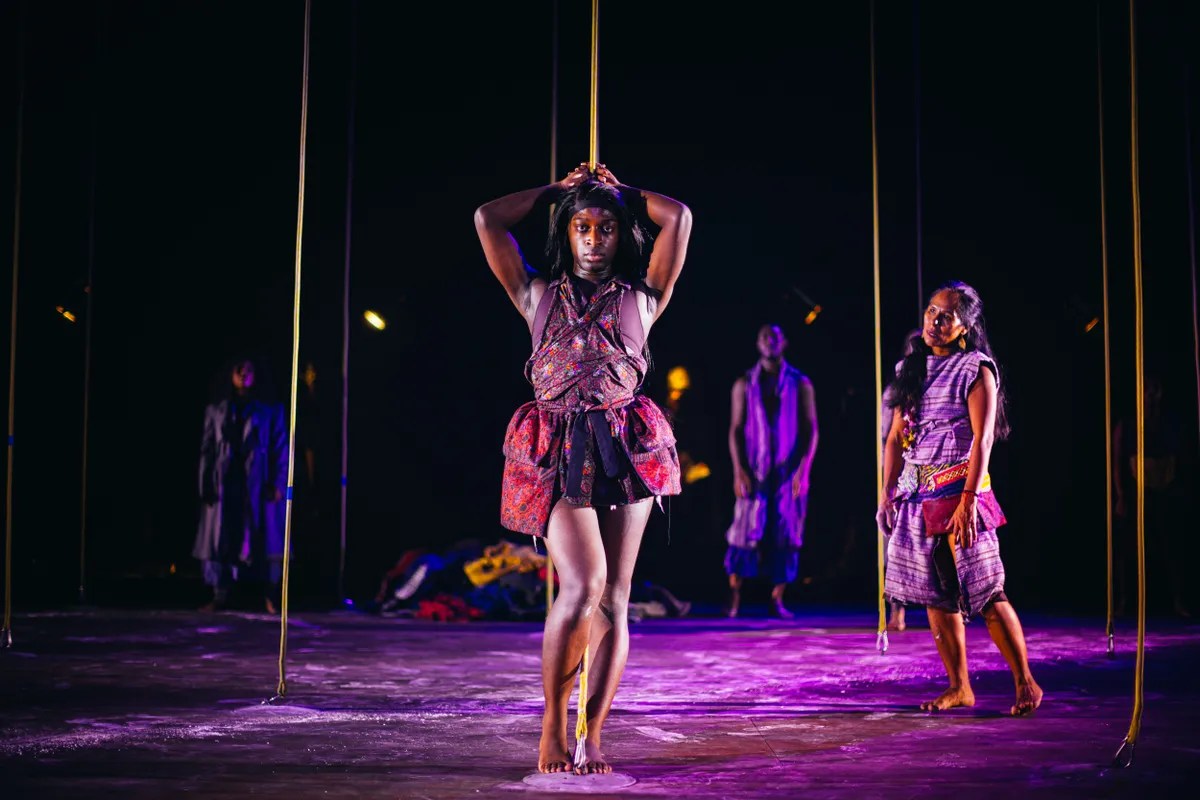
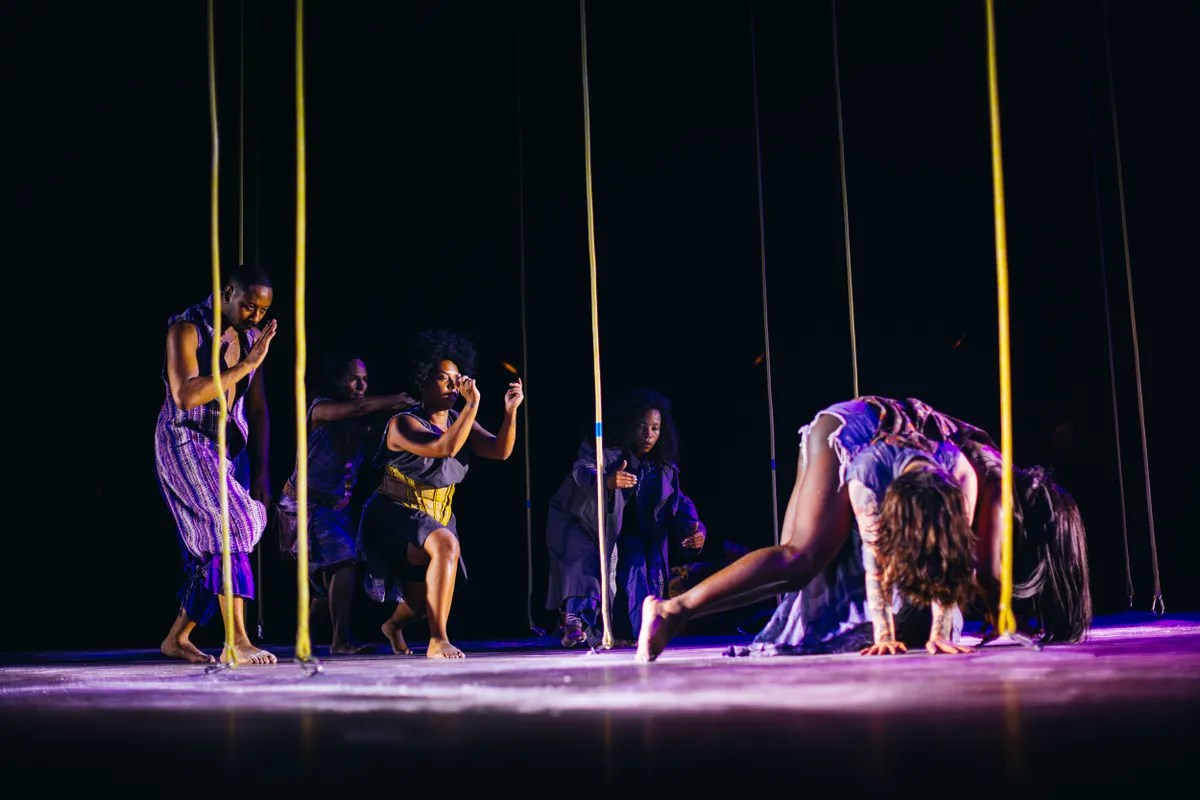
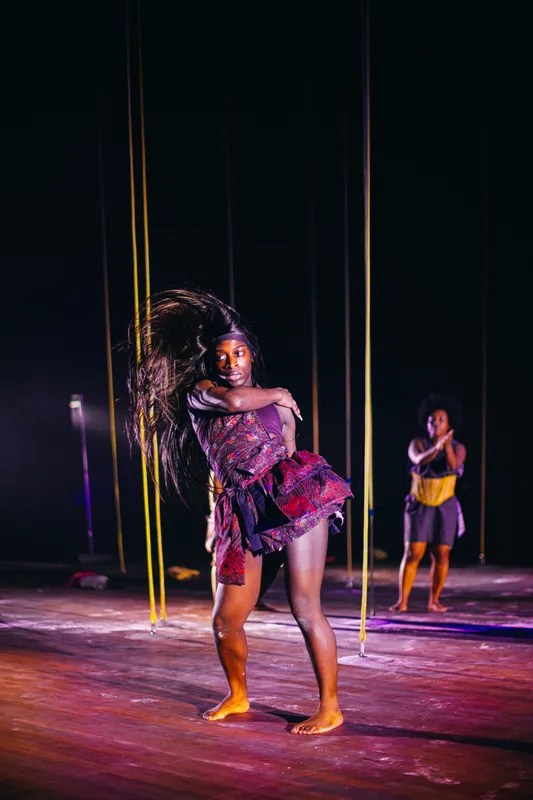
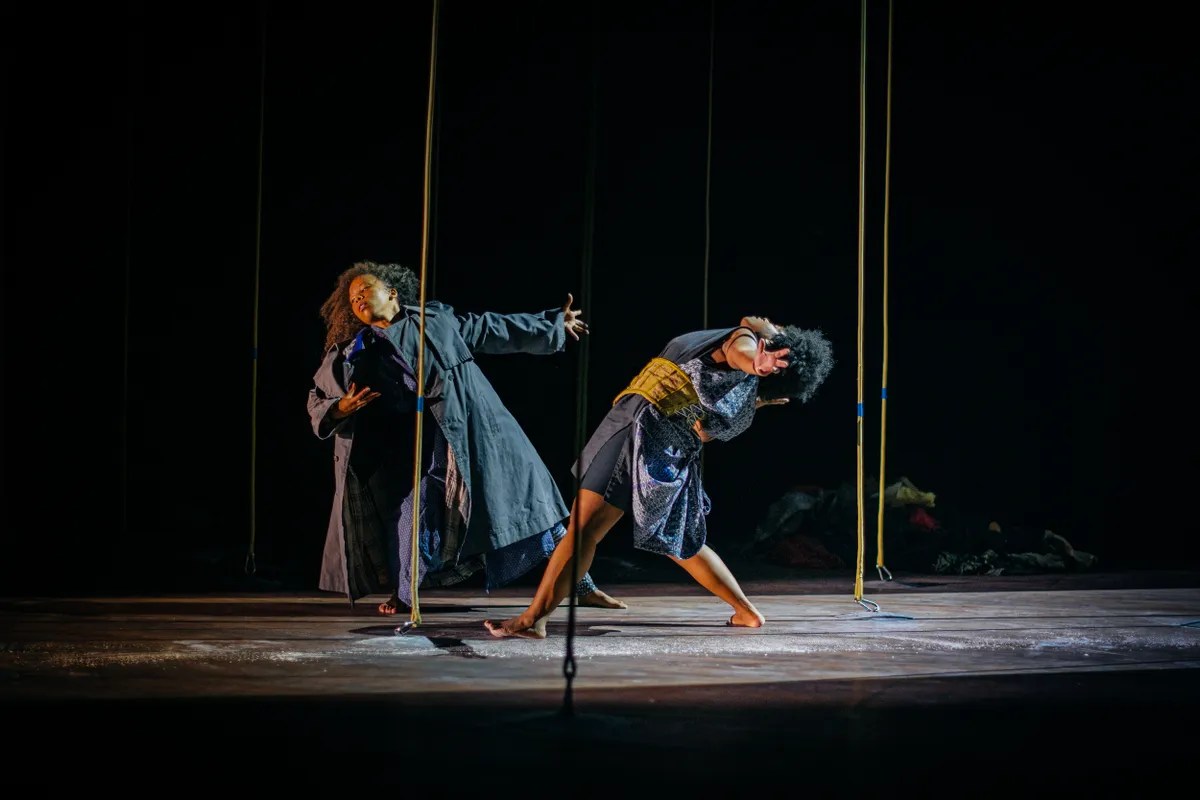
Can we give in to our desire to give and receive love? How can we allow ourselves to feel compassion and connection? In Primisi, Surinamese for “permission”, artistic director, theatre maker and choreographer Alida Dors asks seven performers, each with their own feminine energy, to explore. Attuned to Black feminist thinker bell hooks, whose Love Trilogy is a rare comprehensive study of love and society, Primisi dares you to let go of your advertised definitions, power plays, and cynicism of love.
"Om terug te komen op de vraag of dans kan formuleren: dans is in staat om abstracties vorm te geven maar daar wordt het niet concreter door: het werk blijft aan de toeschouwer. Zo blijf je na de voorstelling achter met de indruk dat je iets belangrijks hebt meegemaakt dat je maar voor een deel hebt kunnen bevatten. Het is de kwaliteit van elk belangrijk ritueel: om dat tot in alle finesses te ervaren, moet je er meermalen aan deelnemen."
    Javier López Piñón @ Theaterkrant
Choreography
Alida Dors & Nicole Geertruida
Premiere:
11.11.2022
More:
Dramaturg’s essay:
Photo:
Mark Bolk
 Eylül Fidan Akıncı
You must be logged in to post a comment.